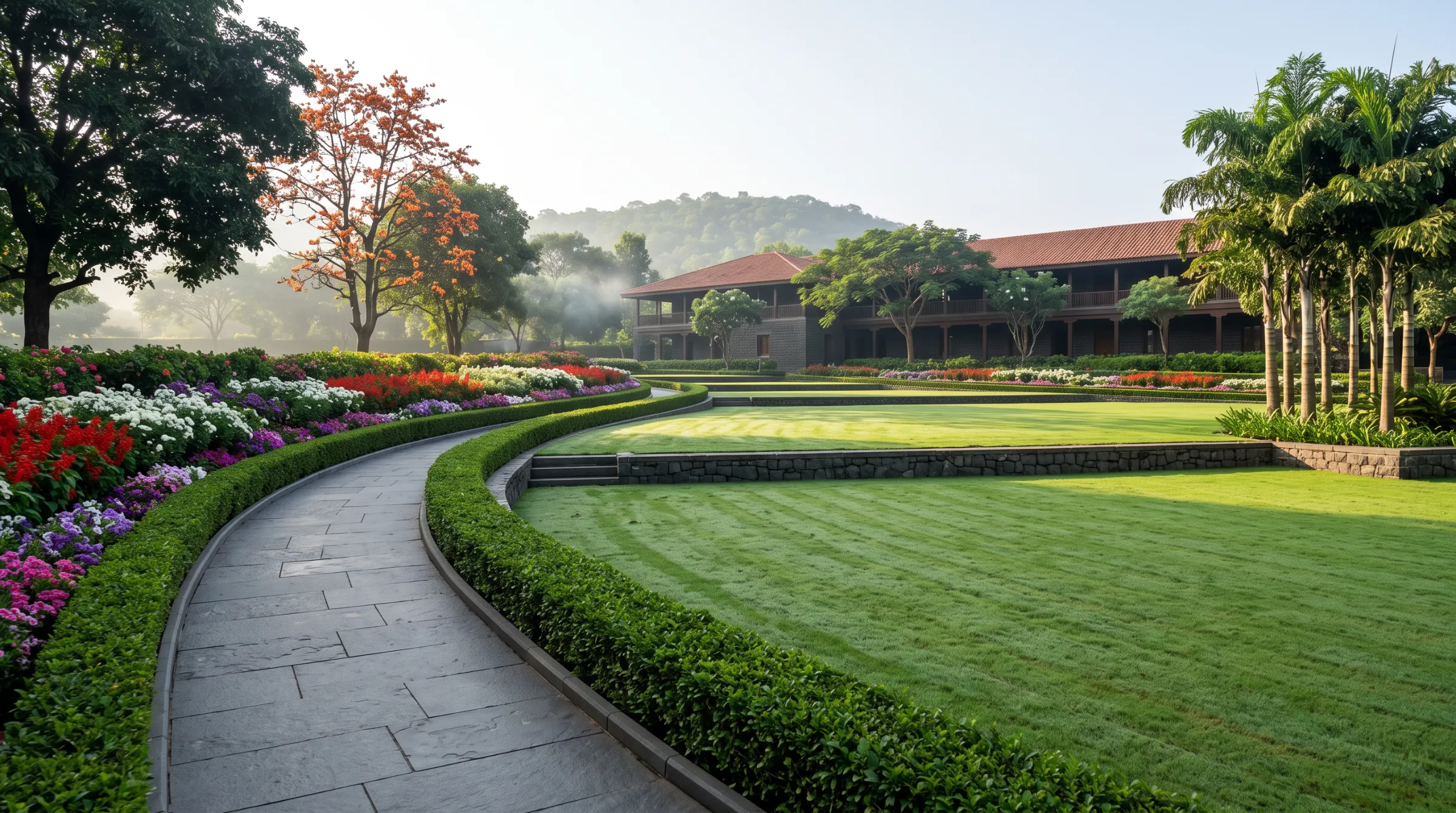
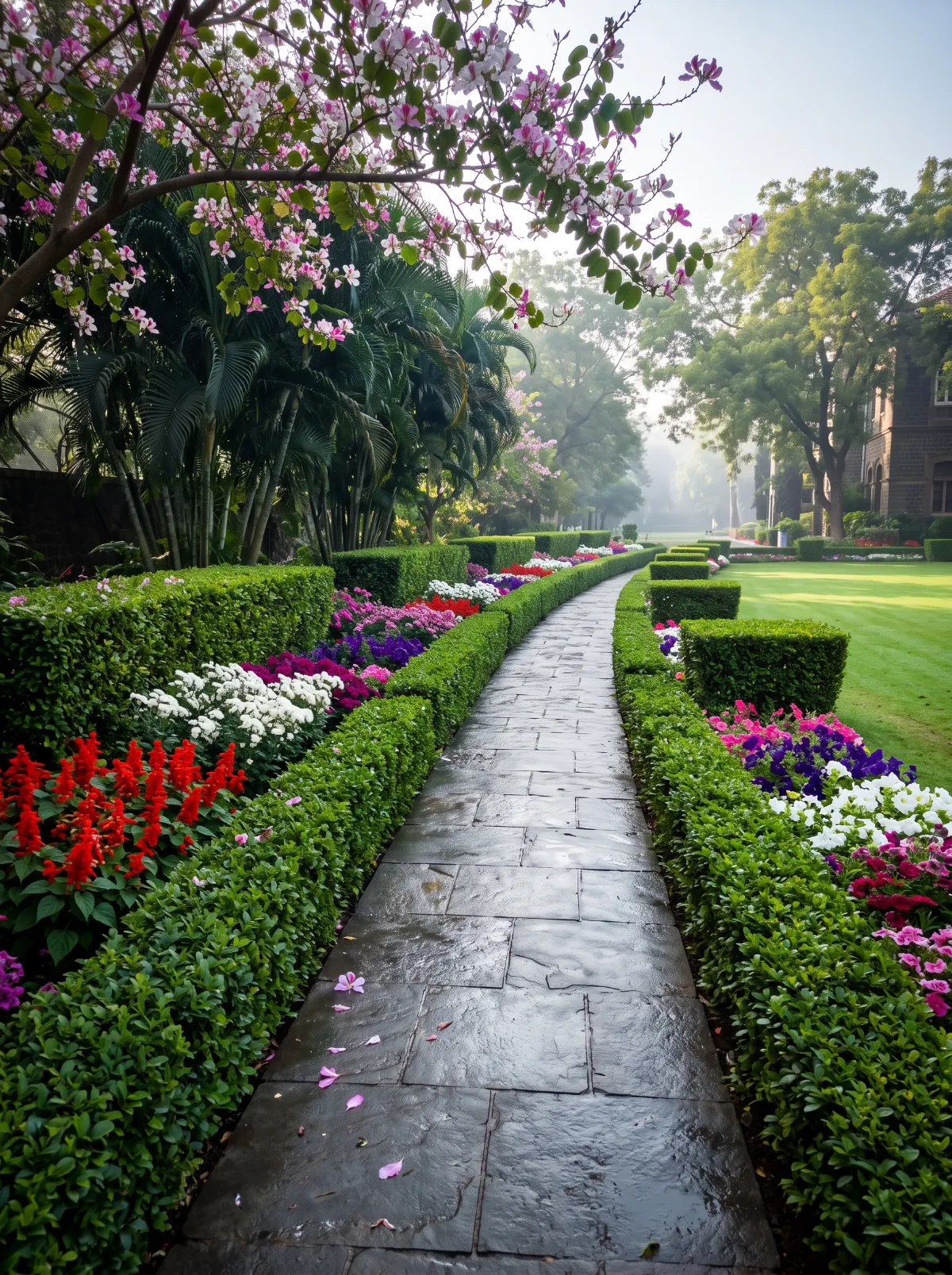
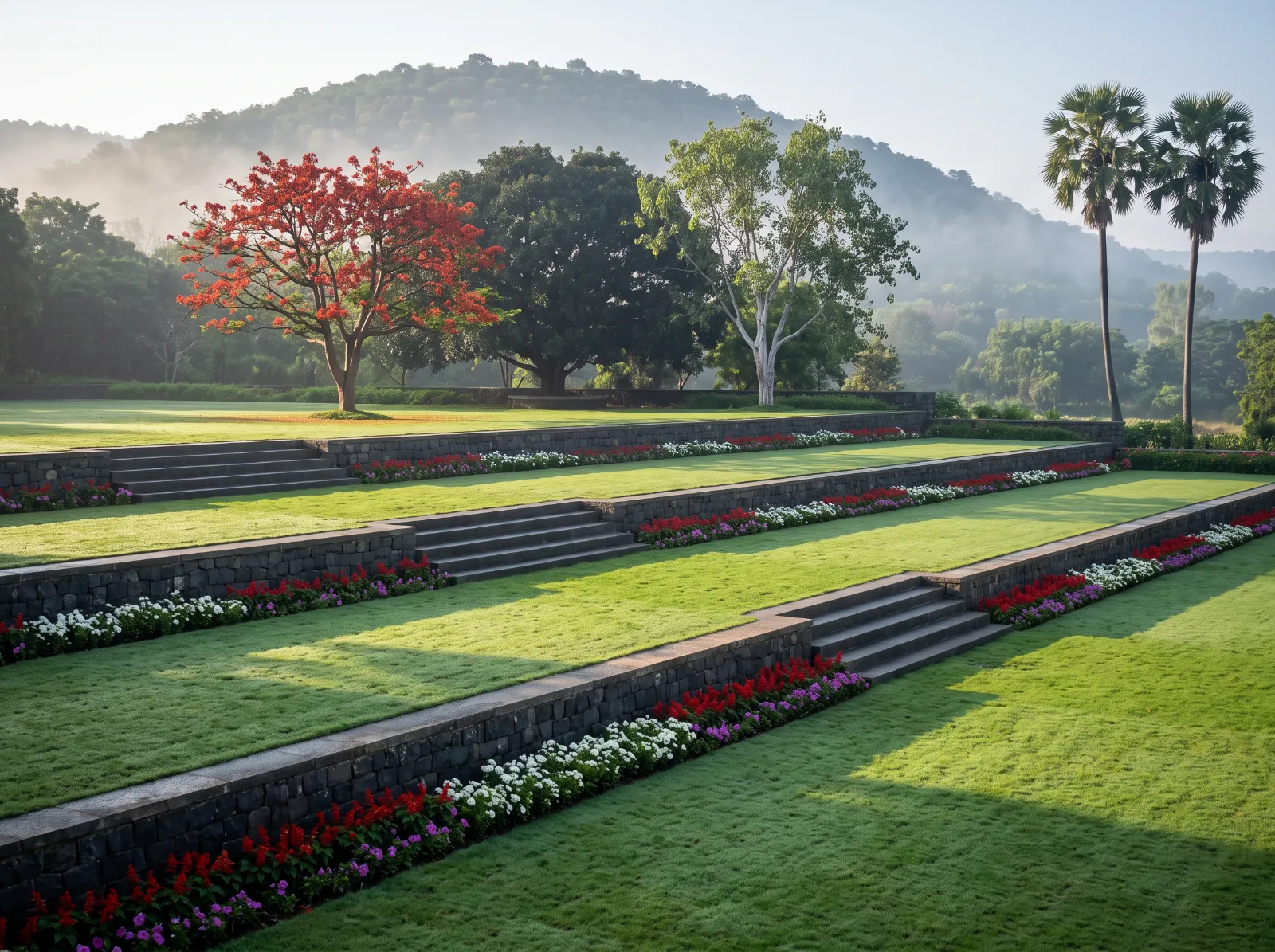
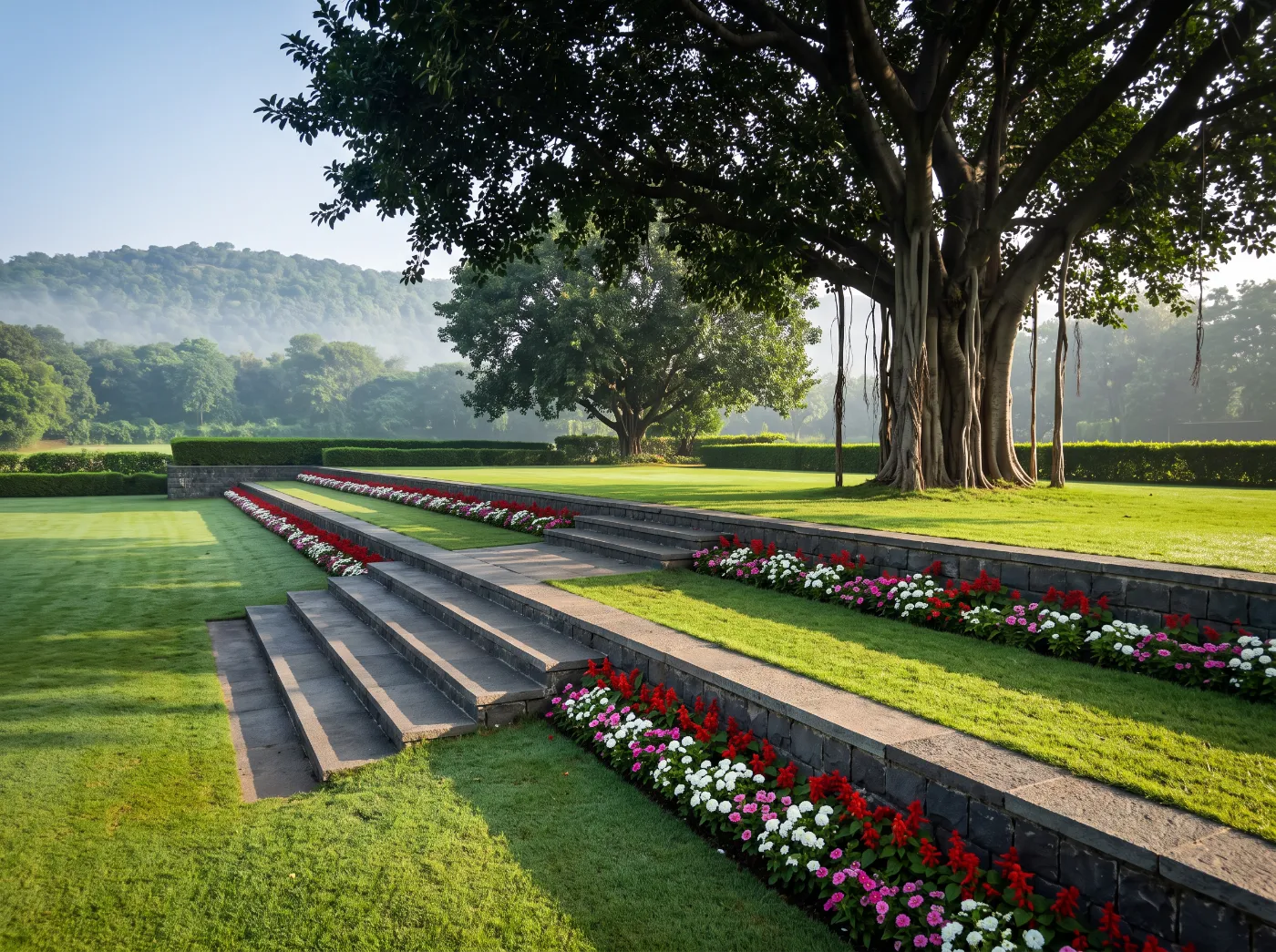
then flower.
Native backbone, formal finish
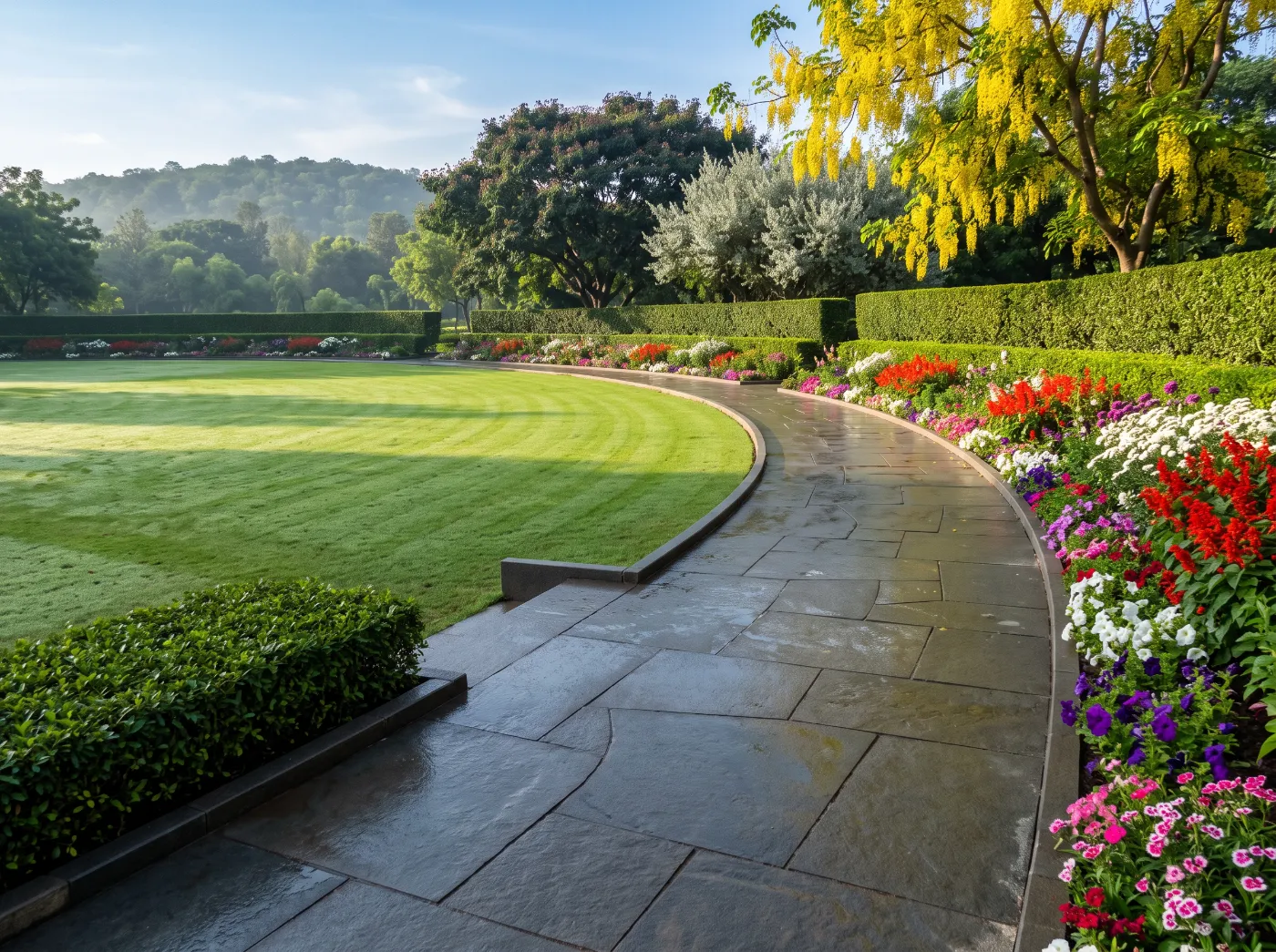
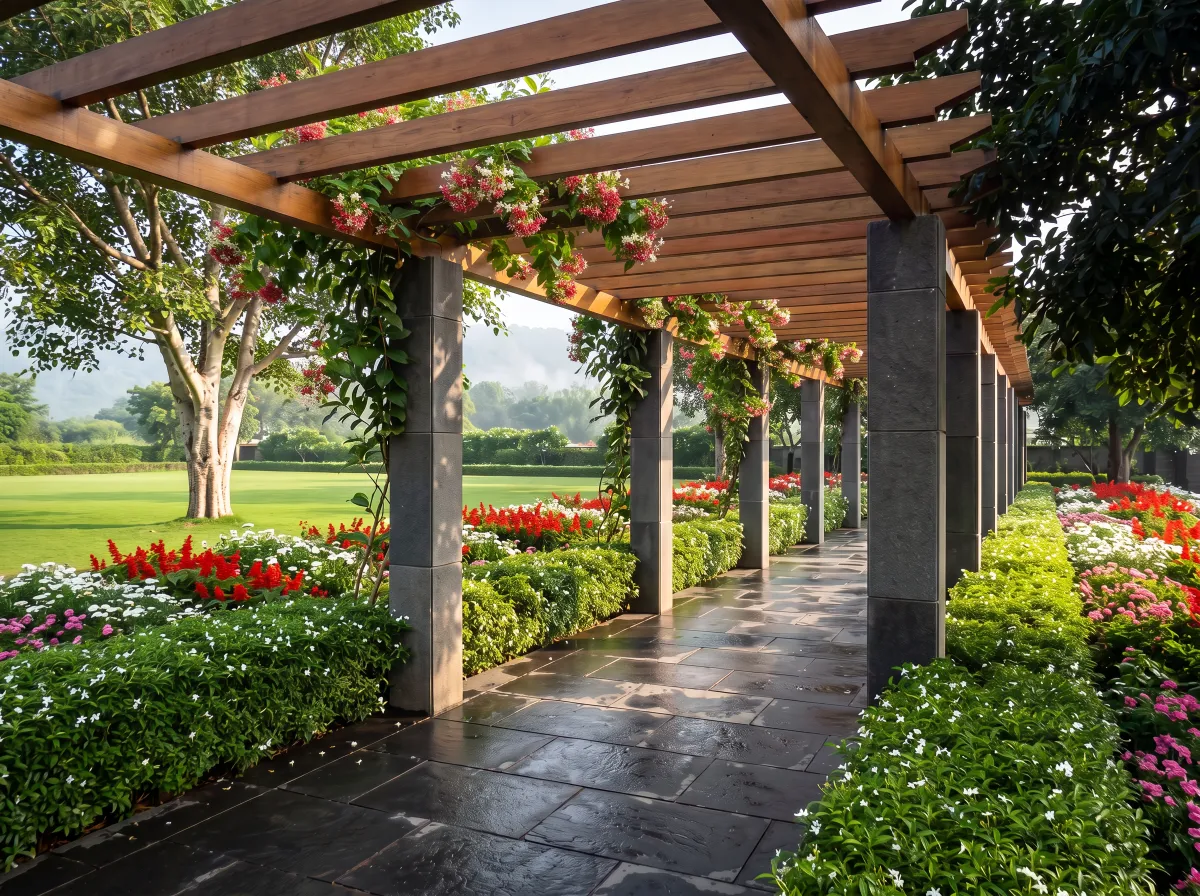
A published Pune inventory lists 127 native species fit for urban landscapes — while three exotics make up nearly half the city’s tree count. We build permanent structure from the native list, then train the formality on top: hedges, borders, massed seasonal colour.
Syzygium cumini·Butea monosperma·Ficus religiosa·Erythrina variegata·Caryota urens·Cassia fistula·Pongamia pinnata·Bauhinia racemosa·Borassus flabellifer·Jasminum sambac·Azadirachta indica·Combretum indicum·Syzygium cumini·Butea monosperma·Ficus religiosa·Erythrina variegata·Caryota urens·Cassia fistula·Pongamia pinnata·Bauhinia racemosa·Borassus flabellifer·Jasminum sambac·Azadirachta indica·Combretum indicum·
Canopy & structure
- Syzygium cuminiJambhul — the Pune shade classic
- Ficus religiosaPimpal
- Mangifera indicaMango
- Pongamia pinnataKaranj — avenue tough
- Terminalia spp.Five natives to choose from
- Azadirachta indicaNeem
Flower & feature
- Butea monospermaPalas — flame of the forest
- Erythrina variegataPangara — coral red
- Bauhinia racemosa & variegataApta, kanchan
- Cassia fistulaBahava — golden shower
- Combretum indicumRangoon creeper, for pergolas
- Jasminum sambacMogra — the scented hedge
Palms & screens
- Caryota urensFishtail palm — Ghats native
- Phoenix sylvestrisShindi — wild date
- Borassus flabelliferTad — the skyline palm
- Vitex negundoNirgudi — workhorse screen
- Seasonal bedsSalvia, chrysanthemum, petunia, dianthus
What we plant less of: Gliricidia and Subabul already account for a third of Pune’s trees, and researchers flag Peltophorum, Cassia siamea and other drive-planted exotics as naturalising invasively. Our structure planting is native-first by default — the exotics earn their place or they don’t get one.