
Creating Native Forests At Remarkable Speed
The Miyawaki afforestation method is an innovative approach to creating dense, self-sustaining urban forests using native plant species. Developed by renowned Japanese botanist Akira Miyawaki, this technique recreates natural forest ecosystems by planting diverse indigenous species closely together, encouraging rapid vertical growth and natural competition.
These miniature forests grow significantly faster than conventional plantations while enhancing biodiversity, improving air quality, reducing urban heat, supporting wildlife, and increasing carbon sequestration.
Temperature Reduction
Helps reduce urban heat island effects and improve local microclimates.
Healthy Soil
Improves soil fertility and natural ecological processes.
Biodiversity
Supports birds, butterflies, insects and local wildlife habitats.
Carbon Capture
Sequesters carbon efficiently while creating sustainable green environments.
🌿 How Miyawaki Forests Work
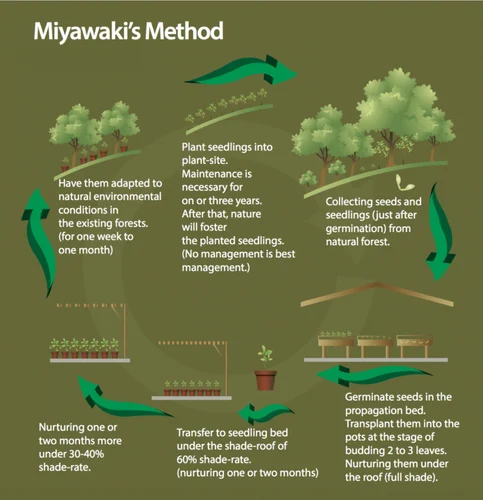
The Miyawaki technique mimics natural forest ecosystems by planting multiple native species in close proximity. Competition for sunlight encourages rapid vertical growth while creating dense vegetation layers. Within a few years, the forest becomes self-sustaining and requires minimal maintenance.
This approach is ideal for urban environments, institutions, industries, residential communities, parks, campuses, and environmental restoration projects where rapid ecological development is desired.
Why Choose Miyawaki Forests?
🌳 Rapid Growth
Forests grow significantly faster than conventional plantations and establish quickly.
🌎 Native Ecosystems
Uses indigenous species to recreate natural ecological balance and resilience.
💧 Water Conservation
Dense canopy development reduces evaporation and improves moisture retention.
🏢 Urban Greening
Transforms small urban spaces into thriving green ecosystems.
“What we can do as landscape architects is look at how we can use materials to the best advantage. And our resources like water. Water is so precious that we can’t waste it. We have to use it in small amounts. And we have to use it effectively.”
— Pamela Palmer🌿 Build a Forest, Not Just a Landscape
Green Architects specializes in Miyawaki forest development, ecological restoration, urban greening, and sustainable landscape solutions that create lasting environmental impact.
Request Consultation