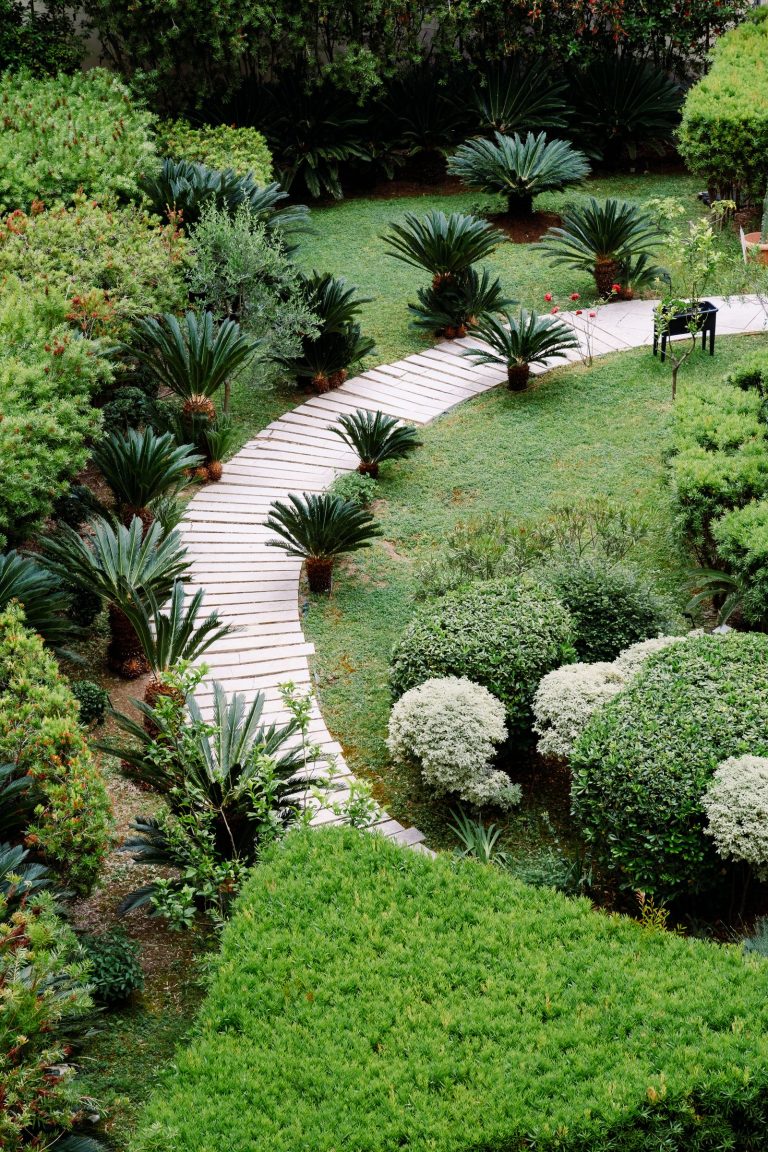
Commercial Landscape Design in Tamil Nadu: Corporate, Industrial & Institutional Projects
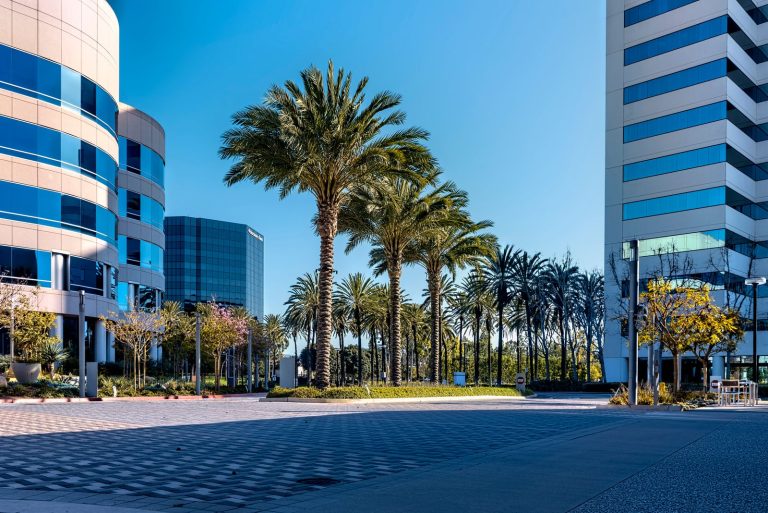
Commercial landscape design balances aesthetics with compliance, durability and low upkeep. Green Architects delivers corporate, industrial and institutional landscapes across Tamil Nadu — design, execution and annual maintenance under one roof.
Key takeaways
- Corporate campuses, factories, hospitals and institutions
- Water-efficient, IGBC-aligned and compliant planting
- End-to-end design, build and AMC across Tamil Nadu
At a Glance: This guide covers professional commercial landscape design for large-scale projects in Tamil Nadu — corporate campuses, manufacturing facilities, hospitals, educational institutions, and hospitality properties. It explains what distinguishes commercial from residential landscape work, what each sector requires, how the design process works, and what procurement managers need to verify before appointing a landscape architect.
Table of Contents
- What Is Commercial Landscape Design — and How It Differs from Residential
- Who Commissions Commercial Landscape Projects in Tamil Nadu
- Corporate Campus Landscaping — Design Principles and Priorities
- Industrial and Manufacturing Facility Landscaping
- Hospital and Healthcare Facility Landscape Design
- Educational Institution Campus Landscapes
- Hotels, Resorts and Hospitality Landscape Design
- The Commercial Landscape Design Process — From Brief to Handover
- Common Mistakes in Commercial Landscape Projects
- How to Evaluate a Commercial Landscape Design Firm in Tamil Nadu
- Frequently Asked Questions
- Work With Green Architects
1. What Is Commercial Landscape Design — and How It Differs from Residential
Commercial landscape design is the professional planning and execution of outdoor environments for non-residential sites — corporate campuses, industrial facilities, hospitals, educational institutions, government buildings, hotels, and public infrastructure. It operates at a fundamentally different scale, complexity, and performance standard than residential landscaping.
The distinction matters because the design parameters are entirely different. A commercial landscape must accommodate hundreds or thousands of daily users without deterioration, meet statutory green cover requirements for planning approval, withstand Tamil Nadu’s climate extremes without constant remedial expenditure, and remain maintainable at scale by a structured professional team under a long-term Annual Maintenance Contract. It must perform reliably for 15 to 20 years — not two or three.
Commercial landscape design is also directly tied to regulatory compliance, institutional credibility, and financial outcomes. For a corporate campus, the external environment affects employee recruitment and retention. For a hospital, it affects patient recovery and infection control compliance. For a hotel, it directly affects occupancy rates and online review scores. These are not decorative outcomes — they are measurable operational results.
Key Insight
A commercial landscape designed by a qualified landscape architect from the concept stage costs less to build, less to maintain, and performs better over 20 years than one assembled by a general contractor after construction is complete. The earlier the landscape professional is appointed, the greater the value they add — and the lower the total lifecycle cost.
The professional landscape architect’s role in commercial projects spans analysis, planning, design, documentation, supervision, and long-term maintenance structuring — a full lifecycle engagement that begins at concept stage and extends through years of operational performance.
2. Who Commissions Commercial Landscape Projects in Tamil Nadu
Tamil Nadu’s sustained growth across multiple development sectors creates consistent and significant demand for professional commercial landscape design. The primary client categories in the state include:
- Corporate campuses and IT parks — particularly in Chennai, Coimbatore and the emerging Trichy corridor — where the landscape forms part of the employee environment and brand identity
- Manufacturing plants, SEZs and industrial estates — where green belt requirements, environmental compliance, and statutory landscaping conditions are the primary drivers
- Multi-specialty hospitals and healthcare campuses — where therapeutic outdoor environments, infection control requirements, and institutional standards define the design brief
- Engineering colleges, universities and school campuses — where campus identity, outdoor learning space, shade provision, and long-term durability determine the design approach
- Five-star hotels, resorts and business hospitality properties — where landscape quality is a revenue-generating asset, directly influencing guest experience, reviews, and rate positioning
- Government and public infrastructure — municipal parks, public institutional buildings, highways and urban landscapes where cost efficiency, durability, and ease of maintenance are the governing parameters
- Residential townships and real estate developments — plotted layouts, gated communities and mixed-use developments where landscape master planning is part of the regulatory approval and sales marketing process
Each of these sectors has different regulatory requirements, different user groups, and different performance benchmarks. A professional commercial landscape architect is trained to work within all of these constraints simultaneously.
“The commercial landscape is not a finishing touch applied after construction. It is a technical system that must be designed from day one — alongside the civil, structural and MEP teams.”
3. Corporate Campus Landscaping — Design Principles and Priorities
The corporate campus landscape serves a dual purpose: it is simultaneously a functional outdoor environment for employees and visitors, and a physical expression of the organisation’s brand and standards. For technology companies, pharmaceutical manufacturers, financial services firms, and large private sector organisations operating in Tamil Nadu, the quality of the campus environment is increasingly a factor in talent attraction, employee wellbeing metrics, and institutional reputation.
- Shade and thermal comfort — Tamil Nadu’s intense summer heat makes canopy tree placement a critical functional requirement. South and west-facing facades need tree cover within three to five years of installation.
- Entry plaza and arrival sequence — the first landscape experience of the campus sets the institutional tone. Fountain features, formal planting geometry, and high-visibility plant specimens are concentrated here.
- Outdoor employee spaces — breakout areas, outdoor seating zones, walking paths and landscape courts that support employee wellbeing and productivity.
- Parking lot landscaping — tree planting within parking areas to reduce the heat island effect of large paved surfaces.
- Green building certification integration — IGBC, GRIHA or LEED credits for heat island reduction, water-efficient irrigation, native species use, and stormwater management.
- Low-maintenance species selection — native and adaptive species with low water and pruning requirements reduce the long-term cost of ownership.
For detailed guidance on corporate campus landscape design: Corporate Campus Landscaping: From Master Planning to Long-Term Maintenance
4. Industrial and Manufacturing Facility Landscaping
Industrial and manufacturing campuses in Tamil Nadu face a distinct and complex landscape brief that extends well beyond visual amenity. The primary landscape requirements include:
- Green belt compliance — Tamil Nadu industrial planning approvals typically require a defined percentage of site area to be maintained as green cover, documented for environmental compliance and factory inspection.
- Noise and dust buffering — dense peripheral plantations of fast-growing trees create functional barriers that reduce dust dispersion and attenuate operational noise.
- Stormwater management — large impervious surfaces generate significant runoff. Landscape design must include grading, swales, retention features, and planted areas that absorb this runoff.
- Miyawaki forest plantations — underutilised peripheral land on industrial campuses is increasingly developed as dense native forest, generating CSR and environmental compliance value.
- Employee facility landscaping — canteen forecourts, security posts, and worker amenity areas with durable landscape treatment that improves the working environment.
Learn more about Landscape Architectural Design services →
Commercial Landscape Services by Green Architects
5. Hospital and Healthcare Facility Landscape Design
Healthcare facility landscapes in Tamil Nadu operate under design constraints unique to the sector. The outdoor environment must serve patients with limited mobility, support infection control protocols, guide visitors efficiently, and operate with minimal maintenance interruption to clinical activities.
- Therapeutic garden design — access to natural outdoor environments accelerates patient recovery. Designed courtyards, accessible garden walks, and sensory planting areas provide shade, scent, and visual interest without allergen-heavy species.
- Infection control compliance — species selection, drainage design, and mulching specification must all be assessed against infection control requirements to avoid harbouring fungal pathogens or mosquito-breeding conditions.
- Accessibility and wayfinding — pathways must be level, slip-resistant, and wide enough for wheelchair and stretcher movement. Landscape wayfinding supports navigation without additional built infrastructure.
- Emergency access clearance — ambulance bays, emergency vehicle turning circles, and helicopter pad clearance zones impose hard constraints on landscape placement.
- Noise and privacy screening — planted buffer screens between ward windows and carparks, service yards, or busy roads improve patient rest quality.
6. Educational Institution Campus Landscapes
Schools, engineering colleges, arts and science colleges, and universities in Tamil Nadu maintain large campus areas that represent significant long-term institutional assets. The campus landscape directly influences accreditation perceptions, student recruitment, faculty retention, and the day-to-day quality of academic life.
- Shade as a functional requirement — students and faculty moving between buildings in Tamil Nadu’s heat require continuous shade cover along pedestrian routes. Canopy tree selection and placement along campus walkways is a primary functional design priority.
- Outdoor learning spaces — amphitheatres, shaded courtyard seating, botanical garden sections, and demonstration planting areas that support science and horticulture programmes.
- NAAC and accreditation compliance — national accreditation frameworks assess campus infrastructure including green cover, maintained landscape areas, and environmental sustainability initiatives.
- Sports and recreation integration — the landscape plan must coordinate with cricket grounds, football fields, athletics tracks, and outdoor courts, including drainage and irrigation of sports turf.
- Durability under high footfall — student populations generate extremely high footfall. Landscape design must specify durable paving, reinforced lawn edges, and robust plant species.
7. Hotels, Resorts and Hospitality Landscape Design
In the hospitality sector, the landscape is a direct revenue-generating asset. Guest reviews consistently cite outdoor environment quality as a primary satisfaction factor. A well-designed hotel landscape commands higher room rates, generates stronger repeat bookings, and produces better online review scores.
- Arrival and entrance experience — specimen plant selection, water features, landscape lighting, and seasonal colour are concentrated at the porte-cochère and entrance plaza.
- Pool and outdoor leisure zones — pool deck planting must provide privacy screening, visual tropical atmosphere, and shade without creating debris hazards in the pool water.
- Restaurant and dining terrace landscapes — outdoor dining environments require planting that creates intimacy, filters ambient noise, and provides shade. Aromatic species add sensory dimension.
- Lighting design integration — uplighting on specimen trees, pathway bollards, water feature lighting, and facade wash lighting create the premium night-time atmosphere of a five-star property.
- Year-round visual consistency — species must maintain visual quality through Tamil Nadu’s dry season months, not just during the monsoon green season.
8. The Commercial Landscape Design Process — From Brief to Handover
Stage 1 — Site Analysis and Design Brief: The landscape architect conducts a detailed site survey covering topography, soil conditions, drainage, sun orientation, existing vegetation, utility locations, and statutory planning constraints. The client’s brief — functional requirements, green building targets, budget, and maintenance model — is documented and agreed before design begins.
Stage 2 — Concept Design: A landscape concept plan shows the broad zoning of the site — entry zones, planted areas, hardscape, water features, recreation spaces — with indicative species palettes and materials. Approved by client before proceeding. Changes at this stage are inexpensive; changes at construction stage are not.
Stage 3 — Detailed Design and Documentation: Detailed construction drawings: planting plans with species, sizes, spacing and quantities; hardscape drawings with material specifications and levels; irrigation system layout; soil preparation and drainage specifications; Bill of Quantities for tender. IGBC or GRIHA documentation prepared here if required.
Stage 4 — Tendering and Contractor Appointment: Tender documents issued to qualified contractors. The landscape architect evaluates bids and advises on contractor selection based on technical capability, not merely price. A low-price tender from an unqualified contractor consistently produces remedial expenditure that exceeds the initial savings.
Stage 5 — Construction Supervision: The landscape architect verifies that soil preparation, plant specifications, hardscape construction, and irrigation installation match the approved design. Substitutions and shortcuts are identified and corrected during construction, not after completion.
Stage 6 — Completion and AMC Handover: On practical completion, a defects liability period begins. Following defects clearance, the landscape transitions to an Annual Maintenance Contract under a scope and performance standard defined in the AMC agreement.
9. Common Mistakes in Commercial Landscape Projects in Tamil Nadu
These Mistakes Cost More to Fix Than to Avoid
The five mistakes below are the most common — and most expensive — errors observed in commercial landscape projects across Tamil Nadu. Each one is avoidable at the design stage. Each one becomes significantly more costly to rectify after installation is complete.
- Appointing the landscape contractor before the landscape architect — when a contractor is appointed without a design brief, there is no quality benchmark, no specification, and no basis for accountability. The landscape architect must precede the contractor.
- Selecting species based on nursery availability rather than climate suitability — exotic species that look impressive at purchase often fail within two Tamil Nadu summers. Native and climate-adapted species have demonstrably lower mortality and maintenance costs.
- Skipping soil preparation to save cost — Tamil Nadu’s laterite and clay soils require significant amendment before sustaining plant growth. Soil preparation costs represent 10–15% of the landscape budget and determine whether the other 85% succeeds or fails.
- Installing irrigation as an afterthought — systems retrofitted into established planting cause root disturbance and cost more than systems installed during construction. The irrigation contract must be executed alongside landscape construction.
- Signing an AMC defined only by visit frequency — a contract without scope, reporting, or performance standards has no enforcement mechanism. Within 18 months, the landscape deteriorates with no contractual basis for remedy.
10. How to Evaluate a Commercial Landscape Design Firm in Tamil Nadu
- Project scale and sector references — ask for references of completed projects at comparable scale and typology. Request site photographs at two to three years post-completion, not just at handover.
- In-house multidisciplinary team — large commercial projects require landscape architects, horticulturists, irrigation engineers, and civil designers working in coordination.
- Full-lifecycle service capability — a firm responsible for design, construction supervision, irrigation, and long-term AMC under a single contract eliminates divided accountability.
- Documentation capability — the ability to produce formal BOQs, construction drawings, specification documents, and IGBC credit documentation is a marker of professional competence.
- Tamil Nadu climate and regulatory knowledge — ask directly about knowledge of local soil types, species for the specific district’s climate zone, and local authority landscaping requirements.
- Maintenance track record — ask how many completed projects are still under their AMC management. Retained long-term relationships demonstrate satisfied clients and landscapes that performed over time.
11. Frequently Asked Questions
Planning a commercial landscape project in Tamil Nadu?
Talk to Green Architects — Tamil Nadu’s Landscape Consortium
25+ years across corporate, industrial, hospital, educational and hospitality landscape projects. Full lifecycle services from design through AMC. 12 cities. Pan-India reach. Based in Trichy.
Request a Project ConsultationContinue Reading
Green Architects – The Landscape Consortium
Professional commercial landscape architecture services across Tamil Nadu since 2001. Tiruchirappalli | greenarchitects.in | +91 98431 67999
- Published in Blog
Landscape Architecture in Tamil Nadu: The Complete Guide
From concept to long-term care, professional landscape architecture transforms how a space looks, performs and endures. This guide by Green Architects covers design, irrigation and maintenance across Tamil Nadu.
Key takeaways
- What landscape architecture covers, end to end
- Sustainable, water-efficient, climate-resilient design
- 25+ years of projects across Tamil Nadu
At a Glance: This is the definitive guide to professional landscape architecture services in Tamil Nadu. It covers every service discipline — from master planning and softscape development to Miyawaki forests, irrigation systems, and long-term AMC — and explains what decision-makers at corporate, industrial, institutional and infrastructure projects need to know before appointing a landscape architect. Use the table of contents to jump to the section most relevant to your project.
Table of Contents
- What Is Landscape Architecture — and Why It Matters for Large Projects
- Who Needs a Landscape Architect in Tamil Nadu
- Landscape Architecture Services in Tamil Nadu: Full Scope
- Landscape Architectural Design
- Softscape and Hardscape Development
- Irrigation Systems
- Garden Maintenance and AMC
- Miyawaki Forests
- Terrace Gardens and Vertical Gardens
- Water Fountains and Water Features
- Why Tamil Nadu’s Climate Demands Specialist Knowledge
- How to Choose the Right Landscape Architect
- Frequently Asked Questions
- Work With Green Architects
1. What Is Landscape Architecture — and Why It Matters for Large Projects
Landscape architecture is the professional discipline concerned with the analysis, planning, design, and management of outdoor environments. In the context of commercial and institutional projects, it is not decorative work. It is technical infrastructure that determines how a built environment manages stormwater, reduces heat load, supports biodiversity, meets green building certification requirements, and performs over a 15 to 20-year operational horizon.
In Tamil Nadu, where construction activity across corporate, industrial, hospital, educational and hospitality sectors has expanded significantly over the past decade, the quality of landscape architecture services has a direct and measurable impact on project value and long-term facility management costs. Landscapes planned and executed by qualified professionals consistently outperform those treated as an afterthought — in durability, in maintenance cost, and in the institutional impression they create.
Key Insight
The distinction between a landscape architect and a landscape contractor is significant. A landscape architect is a planning and design professional who prepares master plans, construction drawings, specifications, and tender documents. A contractor executes work on site. For projects above a certain scale, both are needed — but the design professional must come first.
For large projects in Tamil Nadu, decisions about grading, drainage, utility routing, and tree pit placement made at the design stage define what is achievable on site for the next two decades. A qualified landscape architect working from project inception — not after civil construction is complete — is the single biggest differentiator between a landscape that performs and one that becomes a maintenance liability.
2. Who Needs a Landscape Architect in Tamil Nadu
Professional landscape architecture services are relevant for any development where outdoor space is a significant component of the project — in terms of area, institutional visibility, or long-term operating cost. The primary client categories in Tamil Nadu include:
- Corporate campuses and IT parks — where the external environment is part of the workplace experience and brand positioning. Read more: Corporate Campus Landscaping
- Manufacturing plants and industrial campuses — where green belt requirements, stormwater management, dust and noise buffering, and statutory compliance drive the landscape brief
- Hospitals and healthcare facilities — where external environments must be therapeutic, low-maintenance, and compliant with infection control and wayfinding requirements
- Educational institutions — schools, colleges and universities where campus character, shade provision, and outdoor learning spaces require long-term planning
- Hotels and resorts — where landscape quality directly affects guest experience, occupancy rates, and online review scores
- Government and public infrastructure — parks, boulevards, institutional campuses and public buildings where landscape durability and low maintenance cost are the primary drivers
- Real estate developments — plotted developments, gated communities and mixed-use projects where landscape master planning is part of the approval and marketing process
In each of these contexts, the landscape is a public-facing element of the project that reflects the organisation’s standards and is experienced every day by employees, students, patients, guests or residents. It warrants the same level of professional attention as the building it surrounds.
“A landscape without a properly designed and installed irrigation system will not survive a Tamil Nadu summer — regardless of species selection or soil preparation.”
3. Landscape Architecture Services in Tamil Nadu: Full Scope
A full-spectrum landscape architecture practice offers services across the complete project lifecycle — from initial site planning through to long-term maintenance. The following sections describe each service area in the context of commercial and institutional projects in Tamil Nadu.
All Services by Green Architects
4. Landscape Architectural Design
Landscape architectural design is the consultancy-grade work that sits alongside civil and architectural design in the project development sequence. It begins with site analysis — topography, drainage, soil type, existing vegetation, sun orientation and prevailing winds — and progresses through concept design, master planning, detailed design, and the preparation of construction documents.
For large projects in Tamil Nadu, the design deliverables typically include:
- Landscape master plan and zoning layout
- Planting plans with species, spacing and size specifications
- Hardscape layout drawings with materials, finishes and levels
- Irrigation system design and specification
- Soil preparation and drainage specifications
- Bill of Quantities (BOQ) and tender documents
- IGBC or GRIHA credit documentation where required
Critically, landscape design must begin during the concept stage of the project — not after the building is complete. Grading decisions, utility routing, tree pit placement, and stormwater management integration are all substantially harder and more expensive to address after civil construction is finished.
Learn more about our Landscape Architectural Design services →
5. Softscape and Hardscape Development
Landscape construction divides into two broad categories: softscape and hardscape. Both must be planned and executed together — misalignment between the two is one of the most common causes of landscape failure in commercial projects.
Softscape refers to all living plant material — trees, shrubs, ground covers, climbers, hedging, turf and seasonal colour. In Tamil Nadu’s commercial landscape context, the most important softscape decisions are:
- Species selection based on Tamil Nadu’s climate zones, soil types and drought tolerance — not purely on aesthetics
- Canopy tree placement for shade over pedestrian areas, parking, and south and west-facing building facades
- Soil preparation and organic matter incorporation before planting — the single most underspecified element in commercial landscape BOQs
- Mulching of all planted beds to reduce irrigation demand and suppress weed growth
Hardscape refers to all non-living built landscape elements — pathways, plazas, retaining walls, steps, outdoor seating structures, pergolas, boundary walls and paving. Hardscape decisions affect drainage, accessibility, maintenance access, and the long-term structural integrity of the landscape.
Learn more about Softscape and Hardscape Development →
6. Irrigation Systems for Commercial Landscapes in Tamil Nadu
In Tamil Nadu’s climate, irrigation is not supplemental — it is the primary life-support mechanism for the landscape from January through June. A landscape without a properly designed and installed irrigation system will not survive a Tamil Nadu summer regardless of species selection or soil preparation.
- Drip irrigation for all planted beds — efficient, low-pressure, reduced evaporation loss, suitable for Tamil Nadu’s groundwater constraints
- Pop-up sprinklers for lawn areas where drip is not practical
- Smart controllers and soil moisture sensors for larger campuses — reduce water consumption significantly while maintaining consistent plant health
- Water source planning — borewell, municipal supply, or treated wastewater reuse depending on site availability and state regulations
- Pressure-regulated zone design — ensuring consistent water delivery across large sites with elevation changes
Irrigation infrastructure should be tendered and installed alongside landscape construction — not as a separate contract after planting. Systems retrofitted into established planting cause significant root disturbance and are consistently more expensive than those installed before or during planting.
Learn more about Irrigation System Design and Installation →
7. Garden Maintenance and Annual Maintenance Contracts (AMC)
A well-executed landscape installation reaches its design intent only with consistent, professional maintenance. For corporate campuses, hospitals, hotels and educational institutions in Tamil Nadu, an Annual Maintenance Contract is not optional — it is the management instrument that protects the landscape investment over time.
- Visit frequency — weekly, bi-weekly or monthly depending on site type and planting density
- Scope per visit — pruning, fertilisation, pest and disease management, irrigation inspection, weeding, replanting of failed specimens, lawn maintenance
- Seasonal protocols — pre-monsoon structural pruning and drainage clearance, post-monsoon rejuvenation, peak-summer irrigation schedule adjustments
- Reporting format — site visit report with photographic documentation after each cycle
- Performance standards — measurable indicators of landscape health that the AMC is contracted to maintain
Common Mistake to Avoid
AMC contracts defined only by visit frequency — with no scope, no reporting requirement and no performance standards — are consistently difficult to enforce and underdeliver. Facility managers inheriting such contracts typically find significant corrective expenditure required within the first two years. Always insist on a scope-defined, performance-benchmarked AMC.
Learn more about Garden Maintenance and AMC Services →
8. Miyawaki Forests for Commercial and Industrial Projects
The Miyawaki method — high-density afforestation using native species planted in a specific multi-layered arrangement — has gained significant traction in Indian commercial and industrial landscape projects over the past five years. In Tamil Nadu, it is increasingly specified for CSR commitments, IGBC and GRIHA green building credits, government green infrastructure mandates, and corporate environmental commitments.
A Miyawaki plantation established with appropriate native Tamil Nadu species grows 10 times faster than a conventional plantation and requires minimal maintenance after the first two to three years. It delivers measurable ecological benefit — biodiversity support, carbon sequestration, soil improvement, urban heat island reduction — that conventional landscape planting does not.
Successful Miyawaki implementation in Tamil Nadu requires careful native species selection matched to the specific site’s soil type and rainfall zone, correct planting density and layering, appropriate soil preparation, and a structured two-year establishment maintenance protocol.
Learn more about Miyawaki Forest Plantation Services →
9. Terrace Gardens and Vertical Gardens
As commercial buildings in Tamil Nadu’s urban centres occupy increasingly dense footprints, terrace and vertical garden solutions have moved from architectural novelty to practical landscape infrastructure.
Terrace gardens for commercial buildings, hospitals, and office complexes require structural load-conscious design — lightweight growing media, waterproofing integration, and drainage planning that protects the building fabric. A properly designed commercial terrace garden reduces building cooling load on the floors below, improves stormwater retention, and provides usable outdoor space for employees or patients.
Vertical gardens — living walls applied to building facades, internal atriums, or site boundary structures — are used in Tamil Nadu’s commercial landscape context primarily for facade shading, air quality improvement in internal spaces, and visual brand differentiation. Poorly specified systems fail rapidly and are expensive to remediate.
Terrace Garden Services | Vertical Garden Services
10. Water Fountains and Water Features
Water features — fountains, reflecting pools, cascades, and rill channels — are specified in commercial and institutional landscape projects for their sensory and environmental benefits: sound masking in outdoor seating areas, evaporative cooling in Tamil Nadu’s intense summer heat, and the visual focal point they provide in entry plazas and courtyards.
In Tamil Nadu’s climate, the critical design considerations for commercial water features are efficient water recirculation, evaporation loss management, algae control, and low-maintenance pump and filtration systems. Features designed without these parameters become costly to operate and degrade quickly in appearance.
Learn more about Water Fountain and Feature Design →
11. Why Tamil Nadu’s Climate Demands Specialist Landscape Knowledge
Tamil Nadu does not have a uniform climate, and commercial landscape design must account for significant regional variation across the state.
- Chennai and the northern coastal zone — northeast monsoon dominant, high humidity, moderate temperatures, salt-laden coastal winds in seafront locations
- Trichy, Thanjavur and the Cauvery delta — extreme summer heat exceeding 40°C, hard laterite and alluvial soils, significant dry season from January to June, reliance on borewell irrigation
- Coimbatore, Erode and the western zones — different rainfall patterns influenced by the Western Ghats, relatively more moderate temperatures, different soil profiles
- Madurai, Tirunelveli and the southern districts — very high heat load, distinct seasonal variation, different native flora
Species that perform well in one zone may fail in another. Irrigation demand calculations differ significantly between zones. Soil amendment requirements depend entirely on local soil type. A landscape architect with documented cross-regional experience in Tamil Nadu is not interchangeable with one who has worked primarily in a single city or climate zone.
Additional regulatory knowledge specific to Tamil Nadu includes the Tamil Nadu Tree Preservation Act and its implications for site development, state groundwater regulations affecting irrigation source planning, and local authority requirements for green cover and setback planting in commercial projects.
12. How to Choose the Right Landscape Architect for Your Project in Tamil Nadu
Procurement managers and project heads evaluating landscape architecture firms should apply the following criteria before appointment:
- Demonstrated experience at comparable scale and typology — a firm that has worked primarily on small private gardens is not equipped for a 10-acre industrial campus. Ask for documented project references with scale, typology, and outcome.
- Post-installation performance evidence — design portfolios show how a project looked on completion. Ask how the landscape performed two or three years later.
- Full-lifecycle capability — a firm that offers design, execution, irrigation and AMC under one roof eliminates the divided accountability that arises when multiple vendors share a landscape scope.
- Technical documentation capability — the ability to produce BOQs, specifications, tender documents and IGBC credit documentation distinguishes a professional consultancy from a landscaping contractor.
- Regional climate and regulatory knowledge — ask specifically about experience with Tamil Nadu soil types, species performance in the target zone, and familiarity with local authority requirements.
13. Frequently Asked Questions
What is the difference between a landscape architect and a landscape contractor?
A landscape architect is a design and planning professional who prepares master plans, construction drawings, specifications, and tender documents. A landscape contractor executes physical work on site. For large commercial or institutional projects, both roles are required. Appointing only a contractor without a design professional typically results in an uncoordinated outcome with no basis for quality control.
When in the project timeline should a landscape architect be appointed?
During concept design — at the same stage as the civil and architectural team. Early involvement allows the landscape architect to influence grading, drainage, utility routing, and building setback decisions that directly affect what is possible in the landscape. Appointment after construction is complete limits options and significantly increases cost.
Does landscape architecture contribute to IGBC or GRIHA green building ratings?
Yes. Landscape design contributes to multiple credit categories in IGBC and GRIHA ratings, including site ecology protection, heat island reduction, stormwater management, water-efficient irrigation, native and adaptive species use, and light pollution reduction from outdoor lighting. A landscape architect familiar with the relevant rating system should be engaged from the design stage so that credit targets are achievable within the agreed landscape scope.
How is landscape architecture work priced for commercial projects in Tamil Nadu?
Design consultancy is typically priced as a percentage of the estimated landscape construction value, or as a fixed fee based on site area and project complexity. Construction costs are project-specific and should be based on a properly prepared BOQ developed from the approved design. Attempting to budget from industry averages without a site-specific design and BOQ consistently produces either significant underestimation or unnecessary cost overrun.
What is the minimum site area for a Miyawaki forest plantation?
Miyawaki plantations can be established in areas as small as 100 square metres, though the ecological and visual impact scales significantly with area. For commercial and industrial projects in Tamil Nadu, dedicated Miyawaki zones of 500 square metres and above deliver measurable biodiversity, carbon sequestration and institutional credential value.
How much does a commercial landscape AMC cost in Tamil Nadu?
AMC costs depend on site area, planting density and type, irrigation system complexity, visit frequency, and the scope defined in the contract. Campuses with native species, mulched beds and efficient drip irrigation have substantially lower AMC costs than those with high lawn coverage, exotic species and older overhead sprinkler systems.
Can an existing landscape on a commercial campus be improved without complete replacement?
In most cases, yes. Soil amendment, irrigation system upgrade, selective replanting of failed or inappropriate species, shade tree introduction, and the imposition of a structured maintenance programme can substantially improve the performance and appearance of an established campus landscape. Full demolition and replanting is usually only necessary when drainage failures, soil contamination, or fundamental design errors cannot be corrected through remediation.
Which districts in Tamil Nadu does Green Architects serve?
Green Architects serves clients across Tamil Nadu from its base in Tiruchirappalli. The firm has completed projects in Chennai, Trichy, Coimbatore, Madurai, Salem, Erode, Thanjavur, Tirunelveli, Karur, Vellore, Dindigul and Namakkal, among other locations. Contact the firm directly to discuss your specific location and project requirements.
Ready to start your landscape project?
Talk to Green Architects — Tamil Nadu’s Landscape Consortium
25+ years of experience in corporate, industrial and institutional landscape architecture across Tamil Nadu. Based in Trichy. Serving all districts.
Get a consultationContinue Reading
Green Architects – The Landscape Consortium
Professional landscape architecture services across Tamil Nadu since 2001. Tiruchirappalli | greenarchitects.in | +91 98431 67999
- Published in Blog