
In a dense, fast-warming city like Chennai, a terrace garden is one of the smartest upgrades a home can have — it cools the floor below, adds usable outdoor space, and brings green into an apartment-heavy skyline. But Chennai’s coastal, hot-humid climate makes terrace gardening its own discipline: relentless heat, salt-laden air near the coast, and a north-east monsoon that can drop a month’s rain in days. Design for those conditions and a Chennai rooftop garden thrives with very little fuss.
Here’s how to plan one that lasts.
Chennai’s climate: what your terrace is up against
Three local realities shape every good terrace design in Chennai:
- Heat and humidity, almost year-round. Rooftops bake under long hours of direct sun, and high humidity invites fungal problems on the wrong plants. The palette has to be heat-hardy and airy.
- The north-east monsoon (Oct–Dec). When it rains in Chennai, it pours — and cyclonic gusts come with it. Drainage and waterproofing aren’t details here; they’re the whole game. Standing water on a flat roof is the fastest route to leaks.
- Salt-laden coastal air. Near the coast — ECR, Besant Nagar, Thiruvanmiyur, Adyar — salt spray burns sensitive foliage and corrodes fittings. Coastal homes need salt-tolerant plants and corrosion-resistant hardware.
Design with heat, heavy rain and salt in mind and the rest is easy.
Step 1: Waterproofing and drainage come first — especially in Chennai
Given the monsoon, this is non-negotiable:
- Waterproof the slab with a brick-bat coba layer (correctly sloped) or a modern membrane system — built to take sudden, heavy rain.
- Engineer the slope and outlets so water always runs off fast and never ponds. Add a drainage layer (drainage cell or gravel + geotextile) under the soil.
- Plan for load. Wet planters are heavy; keep deep beds over beams and walls, and keep the slab’s centre light with containers.
Skipping or skimping here is the one mistake that turns a garden into a leaking ceiling. If you’re unsure, have it specified — it’s exactly where professional landscape garden design in Chennai protects both the garden and the building.
Step 2: Design for shade and airflow
Because Chennai is hot for so much of the year, usable terrace gardens are shaded terrace gardens:
- A pergola, shade sail or planted screen turns the terrace into an evening room instead of a furnace.
- Airflow matters — in high humidity, crowded planting traps moisture and breeds fungus. Space plants, and let breeze move through.
- Use a green parapet edge of taller plants to filter wind and sun, and zone a sit-out, a productive corner and a feature area.
Step 3: Coastal-proof, heat-hardy plants
Chennai rooftops reward tough, sun- and salt-tolerant species:
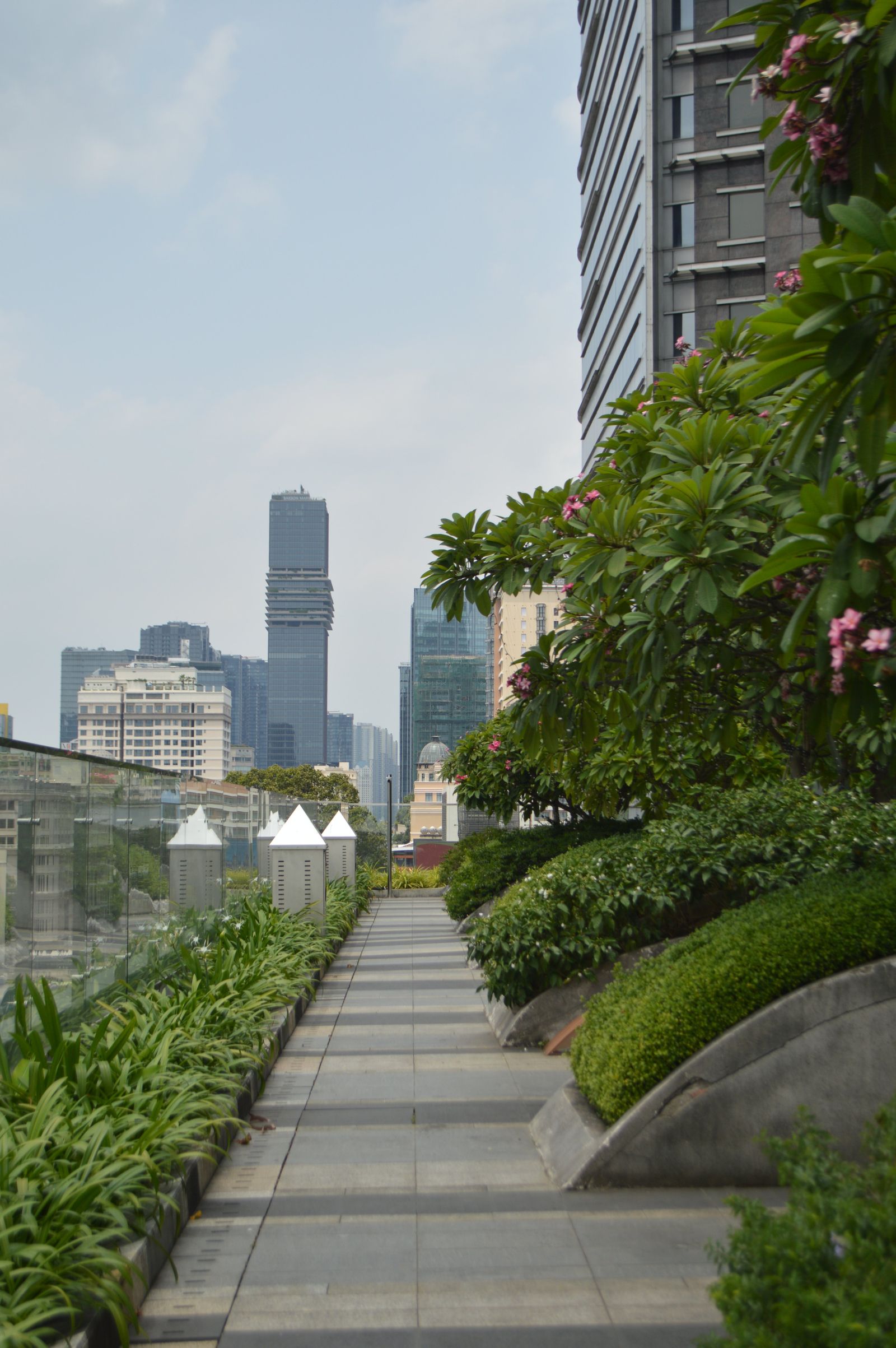
- Flowering and screening: bougainvillea, hibiscus, allamanda, ixora, frangipani, oleander.
- Coastal and structural: coconut and ornamental palms, sea-tolerant foliage, succulents and cacti for low-water accents.
- Edibles: tomatoes, chillies, brinjal, greens and a hardy herb cluster (tulsi, mint, curry leaf) — kept where they get morning sun and afternoon relief.
- Shade creepers over the pergola — money plant, passion flower, jasmine — to cool the sit-out.
Near the coast, lean harder into salt-tolerant species and avoid delicate, thin-leaved plants that scorch in spray.
Step 4: Smart irrigation for a humid-then-dry city
Install drip irrigation with a timer. It delivers water to the roots without wetting foliage (important in Chennai’s humidity, where wet leaves invite disease), saves water in the hot months, and is easy to dial back during the monsoon. Mulch holds moisture and keeps roots cool through the summer.
What does a terrace garden cost in Chennai?
As a rough 2026 guide:
- Starter container garden: modest — pots, media and plants.
- Designed terrace garden with waterproofing, drainage, raised beds, drip irrigation and planting: a one-time investment that protects the building and lasts years.
- Premium terrace landscape with pergola, water feature, lighting and mature plants: higher, reflecting the structural and hardscape work.
In Chennai especially, the waterproofing and monsoon-grade drainage drive the cost more than the planting. A site visit gives a real figure — every rooftop and location differs.
Common Chennai mistakes to avoid
- Under-building waterproofing/drainage for the north-east monsoon.
- Crowded, airless planting that traps humidity and breeds fungus.
- Using salt-sensitive plants on a coastal terrace.
- Heavy concrete planters loaded across the middle of the slab.
- Relying on hand-watering through the long hot season.
Plan a terrace garden built for Chennai
A Chennai terrace garden should stay cool in summer, shrug off the monsoon, and need only light care. With 25+ years and 500+ projects, Green Architects designs and builds rooftop gardens across Chennai that are structurally sound, coastal-proof and genuinely low-maintenance.
Explore our landscape garden design service in Chennai or call +91 98431 67999 for a site visit.
Frequently asked questions
How do I protect a Chennai terrace garden from the monsoon? With proper waterproofing, strong slope to outlets and a drainage layer under the soil, so heavy north-east monsoon rain runs off fast and never pools on the slab.
Which plants survive Chennai’s coastal heat and salt? Salt- and heat-tolerant species like bougainvillea, hibiscus, allamanda, frangipani, oleander, palms and succulents. Near the coast, avoid delicate thin-leaved plants prone to salt burn.
Does humidity cause problems on a Chennai terrace? It can — crowded, wet foliage invites fungus. Space plants for airflow and use drip irrigation that waters roots, not leaves.
How much does a terrace garden cost in Chennai? It depends mostly on waterproofing and monsoon-grade drainage, then planting and features. A site visit gives an accurate quote for your roof and location.
Do you maintain terrace gardens after building them? Yes — flexible and annual maintenance plans keep the planting, irrigation and drainage in good shape so the terrace stays low-effort year-round.