Green Belt Development in Cement Industries: Technical Challenges and Practical Solutions
By Green Architects — The Grove · The Landscape Consortium, Tiruchirappalli, Tamil Nadu
A cement plant is one of the most demanding environments in which to establish living vegetation — alkaline dust, water scarcity, compacted and rocky substrata, heavy vehicle movement and relentless heat all work against the very green belt that regulation and good practice require. This article sets out, from first principles and current evidence, why industrial green belts around cement works so often struggle, and how a landscape-architecture-led approach turns a compliance obligation into a durable, biodiverse and genuinely protective landscape.
Executive Summary
Green belt development is a legal condition of operation for every cement plant in India and a central pillar of the industry’s environmental, social and governance (ESG) commitments. Environmental clearance conditions typically require that a green belt be developed across roughly one-third of the plant area, planted at high density with native species and maintained to a defined survival rate (MoEFCC, 2006; CPCB, 1999). Yet a large proportion of industrial plantations underperform — not because trees will not grow near cement plants, but because the green belt is treated as a planting event rather than as an engineered, decade-long landscape system.
The technical difficulty is real and specific. Continuous deposition of alkaline cement dust raises soil pH, encrusts foliage and suppresses photosynthesis (Lamare & Singh, 2020); process and fugitive dust originate from crushers, raw and cement mills, kilns, clinker coolers, packing plants, conveyor corridors, raw-material yards and the limestone quarry itself (Nguyen et al., 2021; CPCB, 1999). Water is scarce and often saline or recycled; substrates are compacted, rocky or composed of mine overburden; and the operating environment subjects young plants to heat, wind, mechanical damage and the constant churn of expansion. Each of these is individually manageable, but together they explain why survival rates fall short and why belts thin out within a few years of the ceremonial first planting.
This article approaches the problem as a landscape architect and horticulturist would. It reviews the regulatory basis (CPCB green-belt guidelines, the EIA Notification 2006, National Ambient Air Quality Standards, and the 2025 rationalisation of green-cover norms by pollution potential); it quantifies what a well-designed belt actually delivers in dust interception, gaseous uptake, noise attenuation, carbon sequestration and microclimate control; and it translates that into design, species selection, soil rehabilitation, irrigation, maintenance and monitoring protocols suited to South Indian cement sites, with particular reference to the Ariyalur cement belt of Tamil Nadu. It closes with documented case studies — led by The Ramco Cements’ 800-acre Eco Park at Pandalgudi and UltraTech’s mine-boundary planting at Reddipalayam — a catalogue of the twenty-five most common failure modes, a project manager’s checklist, ten reference tables and six recommended figures. The consistent message is that the difference between a failed plantation and a thriving green belt is not the budget for saplings; it is the quality of site diagnosis, species matching, soil and water engineering, and multi-year aftercare.
Introduction
Why green belts matter in the cement sector
The cement industry occupies an unusual position in industrial ecology. It is simultaneously essential to national development — cement is the second most consumed material on earth after water — and one of the most emissions-intensive manufacturing processes, responsible for approximately seven to eight per cent of global anthropogenic carbon dioxide emissions (IEA, 2018; World Economic Forum, 2024). A cement works is also a concentrated, highly visible source of particulate matter, and it is usually paired with a limestone quarry that extends its environmental footprint across hundreds of hectares. Against this backdrop, the green belt is the single most cost-effective, publicly legible and ecologically productive mitigation measure available to a plant. It is a living air filter, a carbon sink, a noise and visual buffer, a habitat and a statement of environmental intent, all at once.
Industrial ecology treats a factory not as an isolated machine but as an organism embedded in a landscape, exchanging materials and energy with its surroundings. A green belt is the clearest expression of this idea in practice: it re-integrates the plant into the local ecosystem, intercepting pollutants at the boundary, moderating the microclimate, harvesting rainwater, stabilising disturbed soils and providing refuge for pollinators, birds and small fauna displaced by industrial land use. Where the belt is designed as an ecological system rather than a decorative screen, it begins to deliver measurable ecosystem services that compound year on year as the canopy matures.
Pollution mitigation, compliance and sustainable industrial landscapes
From a pollution-control standpoint, vegetation works through well-understood mechanisms. Leaves intercept and retain airborne particulates on their surfaces; stomata absorb gaseous pollutants such as sulphur dioxide, oxides of nitrogen and ozone; canopies deflect, refract and absorb sound; and transpiration and shade cool the air and surfaces around the plant (CPCB, 1999; US EPA, n.d.). A dense, multi-tiered belt of the right species, placed correctly relative to the emission sources and prevailing wind, converts a proportion of the plant’s fugitive emissions into trapped, settled or metabolised material before they reach the site boundary and the surrounding community.
From a compliance standpoint, the green belt is not optional. It is written into the environmental clearance (EC) that every cement plant must obtain before construction, and its progress is reported to regulators through the Environmental Management Plan and half-yearly compliance statements (MoEFCC, 2006). Increasingly it is also a material ESG disclosure: large Indian producers report tree numbers, green-cover area, biodiversity baselines and mine-rehabilitation progress in their sustainability and Business Responsibility and Sustainability Reports, and international operators benchmark biodiversity across their entire quarry portfolios (Ambuja Cements, 2025; Holcim, n.d.).
The ambition of this article is to bridge the gap between the regulatory requirement and the ecological reality. A green belt that merely satisfies a percentage-of-area rule but fails to survive, or that survives as a sparse monoculture with little filtering capacity, serves neither the plant nor the community. A green belt engineered as a sustainable industrial landscape — diverse, resilient, correctly irrigated and properly maintained — protects air quality, supports biodiversity, sequesters carbon, improves worker wellbeing and strengthens the plant’s social licence to operate. Achieving the second outcome rather than the first is a technical discipline, and that discipline is the subject of what follows.

Cement Industry Overview: Understanding the Environment the Green Belt Must Survive
Designing a green belt without understanding the plant that generates its stresses is like prescribing medicine without a diagnosis. A cement works is a sequence of crushing, grinding, pyroprocessing and packing operations, each of which loads the surrounding landscape with dust, gases, noise or heat. The green belt must be engineered to survive and to counteract these specific loads, which means the landscape architect must read the plant as a series of source zones.
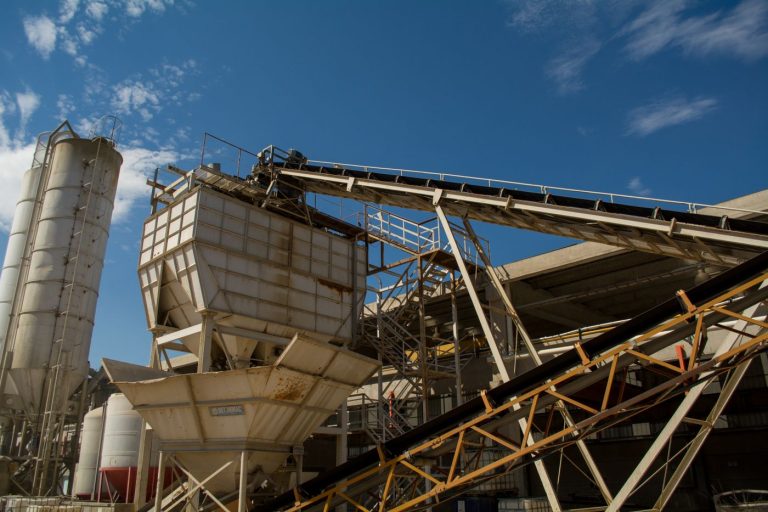
Dust generation and emission points
Particulate matter is released at every comminution and thermal stage of the process. Limestone and raw-material crushers, raw mills, the rotary kiln, clinker coolers, cement (finish) mills and packing plants are the discrete point sources, each typically fitted with electrostatic precipitators or bag filters to control stack emissions (Nguyen et al., 2021). Even with modern arrestment, the sheer scale of material handled means that leakage, upset conditions and bypass events periodically increase local deposition. India’s stack particulate standards for cement plants are stringent, but ambient conditions at the boundary are governed by the National Ambient Air Quality Standards, which set the annual limit for PM10 at 60 µg/m³ and for PM2.5 at 40 µg/m³ (CPCB, 2009).
Fugitive dust — the green belt’s primary target
The emissions a green belt is best placed to intercept are not the tall, filtered stack plumes but the low-level fugitive dust generated across the site: from open limestone and raw-material storage yards, conveyor transfer corridors, unpaved haul roads, vehicle movement and the exposed quarry face. This dust is coarse, settles quickly and concentrates near the ground — exactly the height band that a well-structured, multi-tier planting can filter. Indian regulators explicitly frame green belts as pollution “sinks” for this fugitive load (CPCB, 1999). The design consequence is important: the densest, roughest-leaved, most dust-tolerant species belong on the rows facing the crusher, the yard and the haul road, not distributed evenly around a decorative perimeter.
Gaseous emissions and carbon
Cement is among the most carbon-intensive materials produced at scale. The International Energy Agency’s roadmap attributes roughly seven per cent of global carbon dioxide emissions to cement, at an intensity of about 0.54 tonnes of CO2 per tonne of cement, of which sixty to seventy per cent is process emission from the calcination of limestone and the remainder is fuel combustion (IEA, 2018). Because most of the carbon is chemically unavoidable, offsetting and sequestration measures — including on-site afforestation — carry particular weight in the sector’s decarbonisation narrative. The kiln also generates oxides of nitrogen and, depending on fuel and raw-meal sulphur, sulphur dioxide; vegetation contributes modestly to removing these gases through stomatal uptake (CPCB, 1999).
Noise
Comminution equipment is loud. In-plant measurements at cement works record limestone crushers at around 97 dB(A), crusher hoppers above 100 dB(A), and raw mills, cement mills, coal mills and the rotary kiln in the 88–91 dB(A) range — with compressor rooms exceeding 103 dB(A) — against an occupational limit of 85 dB(A) over eight hours (Nguyen et al., 2021). While a vegetation belt cannot substitute for engineering controls at source, a dense belt more than about 30 metres deep provides a meaningful additional 4–8 dB(A) of attenuation at the boundary, together with valuable visual and psychological screening (see Species Selection and Design sections).
Heat island and microclimate
Large, paved, low-vegetation industrial sites behave like localised heat islands. Paved and built surfaces in comparable settings can run several degrees warmer than vegetated surroundings, and dark surfaces can reach temperatures far above air temperature on hot days (US EPA, n.d.). This elevated heat load stresses both workers and young plants, and it is precisely what a maturing canopy moderates through shade and transpiration — a virtuous circle in which the green belt improves the conditions for its own survival.
Mining and quarry influence
The limestone quarry that feeds the plant is an environmental unit in its own right. Overburden removal, drilling, blasting, loading and haul-road traffic degrade land and generate both suspended and deposited dust, and the resulting spoil and overburden create some of the most difficult substrates for planting anywhere in the industrial landscape. Progressive rehabilitation of mined-out areas — terracing, re-soiling, dense native planting and re-grassing — is now a core expectation of mine-closure planning and a major arena for green-belt and afforestation work at Indian cement operations (UltraTech Cement, 2025).
Reading a cement plant as source zones
For green-belt design, it helps to map the site into concentrated stress zones — the crusher and hopper (dust + extreme noise), raw-material and clinker yards (fugitive dust), conveyor corridors (linear dust + access constraint), the kiln and cooler line (heat + gases), the packing plant (fine dust), haul roads (coarse dust + vehicle risk) and the quarry (spoil, dust, land disturbance). Each zone calls for a different planting palette, width and structure. A single uniform perimeter belt cannot answer all of them.
The Ariyalur context
Nowhere in Tamil Nadu is this more concentrated than in Ariyalur district, officially styled the “Land of Cements,” where the district administration records seven cement plants and dozens of major-mineral limestone leases in a compact belt (Ariyalur District Administration, n.d.). For a Tamil Nadu landscape practice, the Ariyalur–Perambalur belt, together with the older India Cements works at Sankarnagar in Tirunelveli and the Ramco operations in Virudhunagar, defines the real-world canvas on which industrial green-belt design must perform: hot, semi-arid, alkaline-dust-laden and water-constrained.
Regulatory Framework
Green-belt development in India sits at the intersection of pollution-control guidance, environmental-clearance conditions and, increasingly, corporate ESG disclosure. Understanding the framework matters because it defines the minimum obligations a plant must meet — and because good design consistently exceeds those minimums for sound ecological reasons.
CPCB green-belt guidelines
The foundational technical document is the Central Pollution Control Board’s Guidelines for Developing Greenbelts (PROBES/75/1999–2000), issued under the Ministry of Environment and Forests (CPCB, 1999). Rather than prescribing a single fixed tree count, the guideline is built around a dispersion-and-attenuation logic: it treats the belt as a pollutant sink whose effectiveness depends on width, height, foliage density and distance from the source, and it supplies extensive species lists organised by bio-climatic zone, favouring pollution-tolerant native species with high foliage surface area. It is the intellectual basis for the “select the right species, in the right structure, in the right place” approach that underpins all credible green-belt design. State pollution control boards issue parallel guidance in the same tradition (Bihar SPCB, n.d.).
MoEFCC environmental clearance and the EIA Notification 2006
The binding legal instrument is the Environmental Impact Assessment Notification, 2006, under which cement plants appear as Schedule item 3(b) (MoEFCC, 2006). Integrated plants at or above one million tonnes per annum are appraised centrally as Category A projects; smaller units and stand-alone grinding units are appraised by the State authority as Category B. Green-belt development is a standard condition of the clearance. In a representative recent clearance for a cement expansion, the condition required a three-tier green belt across at least 33 per cent of the total project area, planted with native species along the periphery at a tree density of not less than 2,500 per hectare — in that instance amounting to roughly 16 hectares of green belt and some forty thousand saplings (Shree Digvijay Cement, 2023). These figures are typical of the sector: green belt over about one-third of the site, high planting density, native species and a specified survival rate, commonly around 80 per cent (Rajasekaran et al., 2019).
The Environmental Management Plan
The green belt is budgeted, scheduled and monitored within the plant’s Environmental Management Plan (EMP), a mandatory component of the EC process. The EMP ties the belt to a capital and recurring budget, links it to air, water, noise and soil monitoring, and commits the plant to annual survival assessment and gap-filling of dead saplings. Compliance is reported to the regulator half-yearly, increasingly with photographic and geotagged evidence and, under recent norms, drone imagery (UltraTech Cement, 2025).
The 2025 rationalisation of green-cover norms
In October 2025 the MoEFCC moved from a uniform 33 per cent rule toward green-cover requirements graded by a project’s pollution potential, with the most polluting (“red”) air-emitting sectors held to a defined tier and lighter categories to lower percentages, supported by half-yearly drone-based reporting (ESG Broadcast, 2025). Cement, as a highly polluting sector, sits in the upper tier. Two practical points follow. First, plants already operating under a 33 per cent EC condition generally remain bound by that condition. Second, the direction of travel is toward verified green cover — measured, monitored and evidenced — rather than nominal area, which rewards belts that actually establish and survive. (The exact graded percentages should be confirmed against the original MoEFCC Office Memorandum before being quoted in a compliance document.)
Ambient air quality standards
The green belt ultimately serves the National Ambient Air Quality Standards, 2009, which set annual and 24-hour limits for particulate matter and gases at the plant boundary and in surrounding settlements: PM10 at 60 (annual) and 100 (24-hour) µg/m³; PM2.5 at 40 and 60 µg/m³; with corresponding limits for SO2 and NO2 (CPCB, 2009). A belt’s real success is measured not by the number of trees planted but by its contribution to keeping boundary concentrations within these limits.
ISO 14001, ESG and enforcement
Beyond statutory compliance, green belts feature in voluntary and market frameworks. An ISO 14001 environmental management system embeds the belt within a plan-do-check-act cycle of objectives and monitoring, and ESG and Business Responsibility and Sustainability Reporting increasingly quantify tree numbers, green cover and biodiversity outcomes for investors (Ambuja Cements, 2025). The consequences of neglect are equally real: the National Green Tribunal continues to hear enforcement matters concerning cement-plant dust control and green-belt adequacy, underlining that green-belt obligations are actively policed rather than nominal (Down To Earth, 2026). In Tamil Nadu, the State Pollution Control Board administers consent conditions and monitors green-belt compliance at each plant.

Objectives of Industrial Green Belts
A well-conceived green belt is asked to do many things at once. Setting these objectives out explicitly at the design stage is what allows them to be prioritised, measured and — critically — reconciled where they conflict. The following are the functions a cement-plant green belt is expected to deliver.
Dust filtration
Interception of fugitive particulate matter is the primary rationale for the belt. Foliage captures dust on leaf surfaces, where it is retained until washed off by rain or removed at leaf-fall. Capture efficiency varies enormously by species and leaf structure: guideline data for Indian species record dust-holding capacities of the order of 4–5 g per square metre of leaf surface for high performers such as teak and mango (Bihar SPCB, n.d.), and species studies in Tamil Nadu and elsewhere confirm that rough, hairy, large and densely arranged leaves trap the most particulate (see Plant Selection). A belt of the right species can substantially reduce the ground-level dust load reaching the boundary.
Carbon sequestration
Every tree in the belt is a small, permanent carbon store, and the belt as a whole is a modest but genuine offset against the plant’s process emissions. Sequestration rates are species- and site-dependent; fast-growing Indian species can fix several tonnes of carbon per hectare per year, while a conservative planning figure for a young tropical tree is of the order of 22 kg of CO2 per tree per year (Kaul et al., 2011; Tree-Nation, n.d.). Over a mature belt of tens of thousands of trees, this accumulates into a reportable and ESG-relevant carbon benefit.
Biodiversity enhancement
A diverse, multi-layered belt provides food and shelter for pollinators, birds and small fauna, re-establishing a functioning micro-ecosystem on an otherwise sterile industrial site. Native fruiting and flowering species, understorey shrubs and undisturbed ground layers turn the belt from a green screen into living habitat — a shift that international operators now measure formally through biodiversity indicator systems (Holcim, n.d.).
Noise attenuation
A dense belt deeper than roughly 20–30 metres, with a continuous multi-tier structure and no gaps, deflects, refracts and absorbs sound, contributing an additional few decibels of attenuation over the effect of distance alone, and — just as importantly — removing the visible source, which reduces perceived noise (academic guidance summarised in the Species section). Its value is greatest where housing or sensitive receptors lie close to crushers or mills.
Wind velocity reduction and shelter
Structured as a shelterbelt or windbreak, the belt reduces wind speed to leeward, suppressing the pick-up and transport of loose dust from yards and haul roads and reducing evaporative stress on both plants and workers. Wind reduction is a design outcome of belt height, density and orientation relative to the prevailing wind.
Visual screening
The belt screens the industrial mass of the plant from roads, settlements and approach routes, softening the visual impact and signalling environmental stewardship. Visual screening is often the objective most valued by the surrounding community and by plant management, and it is achieved by tall, dense, evergreen species on the sightlines that matter.
Microclimate improvement and worker wellbeing
Shade and transpiration lower air and surface temperatures within and downwind of the belt, improving conditions for workers and reducing the heat-island effect discussed above. Access to green space and shaded amenity areas is associated with improved wellbeing, and progressive plants increasingly design parts of the belt as usable green amenity for staff.
Ecological restoration
Finally, on mined-out land and disturbed ground, the belt becomes the vehicle for ecological restoration — rebuilding soil, re-vegetating spoil, stabilising slopes and returning the land toward a self-sustaining ecosystem. This is the most ambitious objective and, as the Tamil Nadu case studies show, the one with the greatest reputational and ecological upside.
When objectives conflict
These goals are not always compatible. The fastest-growing, highest-carbon species (eucalyptus, poplar) are heavy water users of low biodiversity value and are poor choices as the backbone of a water-scarce South Indian belt. The densest visual screen may not be the best pollinator habitat. Good design resolves these tensions deliberately — for example, a dust-tolerant, drought-hardy structural outer belt, a biodiverse fruiting middle layer and an amenity inner edge — rather than defaulting to a single fast species planted everywhere.

Major Technical Challenges
The gap between a green belt on paper and a green belt on the ground is filled with technical challenges specific to the cement environment. The following sections diagnose them in the order a landscape architect would assess a site: soil, water, plant survival, climate and operations.
Soil-related challenges
Alkalinity from cement dust. The most distinctive and best-documented soil problem at cement plants is progressive alkalinisation. Continuous deposition of alkaline cement dust raises soil pH; a peer-reviewed gradient study around cement plants recorded naturally acidic soils (pH 4.4–5.5) shifting to slightly alkaline (pH 6.7–7.2) closer to the plant, accompanied by falling organic carbon (from around 2.5 per cent to as low as 1.3 per cent), declining total nitrogen, reduced water-holding capacity and increased bulk density — a signature of compaction (Lamare & Singh, 2020). High pH locks up iron, manganese, phosphorus and other nutrients, producing chlorosis and stunting even where water is adequate.
Dust encrustation. Beyond the soil, deposited cement dust forms a hydrated calcium-silicate crust on leaves and soil surfaces that sets hard, sealing the soil surface against infiltration and clogging stomata so that gas exchange and photosynthesis are impaired (secondary review in Section references). Newly planted saplings, with limited leaf area and shallow roots, are especially vulnerable.
Poor organic matter, compaction and rocky or overburden substrata. Cement-plant soils are frequently construction-disturbed, scraped, compacted by heavy plant, thin over rock, or composed entirely of mine overburden and spoil with negligible organic matter, poor structure and low water-holding capacity. These substrates neither hold water nor supply nutrients and physically resist root penetration — the single biggest reason first-year saplings fail on quarry-rehabilitation sites.
Water-related challenges
Scarcity and seasonality. Most South Indian cement plants sit in semi-arid, hard-rock terrain where water is scarce, groundwater is stressed and rainfall is concentrated in a short monsoon. The belt must be established through long dry seasons when demand is highest and supply lowest.
Salinity and recycled water. Plants increasingly, and rightly, irrigate green belts with treated sewage or process water to avoid competing with drinking supplies. This water is often saline or sodic and must be managed: FAO guidance treats irrigation water below about 0.7 dS/m as unrestricted, 0.7–3.0 dS/m as requiring management and above 3.0 dS/m as severely restrictive, with sodium hazard assessed through the sodium adsorption ratio (Ayers & Westcot, 1985). Continuous irrigation with poor-quality water can itself salinise the root zone if drainage and leaching are not managed.
Irrigation limitations. Large perimeter belts and remote mine-rehabilitation areas are hard and expensive to irrigate uniformly; pressure losses, clogged emitters, vandalism and the sheer length of runs all conspire to leave parts of the belt under-watered while others are drowned.
Plant survival issues
Heat and dust stress. Young plants face combined heat, dust and wind stress that mature trees shrug off. Leaf temperatures rise, dust-clogged stomata cannot cool the plant by transpiration, and growth stalls.
Poor establishment. The first two to three years are decisive. Saplings planted too small, too deep, in unimproved pits, without staking, mulching or reliable water frequently die in the first summer, and a belt that loses a large fraction of its plants in year one rarely recovers its intended density.
Grazing and human interference. Cattle and goat grazing, browsing, trampling, firewood collection and encroachment are among the most common — and most underestimated — causes of plantation failure, particularly on unfenced peripheral belts and mine areas adjoining villages.
Climate challenges
High summer temperatures, intense solar radiation, hot desiccating winds, recurrent drought and, increasingly, erratic and extreme rainfall all test the belt. Climate variability widens the range of stresses the planting must tolerate, which is a direct argument for species and structural diversity rather than a single “best” species.
Operational challenges
A cement plant is a live, expanding industrial site. Heavy vehicle movement damages edge planting; mechanical damage from maintenance and construction is routine; utility corridors, pipe racks and conveyor belts fragment the available planting ground and impose access and safety constraints; and expansion projects periodically consume land that was previously green belt, requiring compensatory planting elsewhere. Designing the belt around — and defending it from — these operational realities is as important as any horticultural decision.
Maintenance Challenges
If establishment is the first battle, maintenance is the long war — and it is the phase where most green belts are quietly lost. A plantation that is celebrated at inauguration and then left to fend for itself will thin out within a few seasons. The recurring maintenance challenges are as follows.
Weed management. Aggressive weeds — including invasive Prosopis juliflora and Lantana camara — compete with young plants for water, light and nutrients and, if unmanaged, can overwhelm a young belt entirely. Weeding is labour-intensive and unglamorous, and it is often the first task to be cut.
Irrigation continuity. Drip systems clog, pumps fail, lines are cut and schedules slip. A lapse of a few weeks in peak summer can undo two years of establishment.
Fertilisation and soil replenishment. Poor industrial soils need sustained organic input; a single application of compost at planting is not enough to carry a tree to self-sufficiency on spoil or alkaline ground.
Pruning, pest and disease control. Formative pruning, canopy management for windbreaks, and integrated management of pests and disease all require skilled, timely attention that a plant focused on cement production may not resource.
Labour, budget and monitoring. The deepest challenges are institutional: shortage of trained horticultural labour, maintenance budgets that shrink once the capital planting is complete, and monitoring that reports numbers planted rather than numbers surviving and thriving. Casualty replacement — replacing dead saplings each year to hold the belt at its design density — is frequently neglected. Where monitoring fails, gradual attrition goes unnoticed until the belt is visibly sparse and the survival rate has fallen well below the ~80 per cent that clearance conditions assume (Rajasekaran et al., 2019).
Species Selection Challenges
More plantations fail for wrong species selection than for almost any other single reason. A species that is cheap, available at the nursery and quick to plant is not necessarily a species that will survive alkaline dust, tolerate drought, resist grazing and filter particulate for thirty years. Three recurring choices define the outcome.
Native versus exotic
Native and locally adapted species are, as a rule, better suited to local soil, climate and rainfall, support more biodiversity, and demand less water and intervention once established. The CPCB guideline explicitly favours pollution-tolerant native species (CPCB, 1999). Exotics are sometimes chosen for fast screening or ornamental effect, but many of the “reliable” exotics used in industrial planting — most notoriously Prosopis juliflora — are invasive, displace native vegetation, offer little habitat value and are difficult to remove. The default should be native; exotics should be justified case by case and invasives excluded outright.
Fast-growing versus long-life species
Fast-growing species deliver quick screening and early carbon capture but are often short-lived, weak-wooded, thirsty and prone to wind and pest damage; long-lived structural species establish more slowly but form the durable backbone of the belt. The resolution is not to choose one over the other but to combine them — fast nurse species to provide early cover and shelter, interplanted with long-life natives that will dominate the mature canopy — and to plan for the eventual thinning of the nurse crop.
Monoculture versus mixed plantation
A single-species block is simpler to plant and manage, but it is ecologically fragile: one pest, one disease or one climatic extreme can defoliate the entire belt, and a monoculture supports minimal biodiversity and provides uneven filtering. A mixed, multi-layered plantation spreads risk, extends flowering and fruiting through the year for pollinators and birds, and combines species whose different leaf structures and canopy heights filter a wider range of particle sizes. Diversity is not an aesthetic preference here; it is the primary insurance policy for a belt that must survive decades of variable stress.
Landscape Design Considerations
Design is where ecological understanding becomes a buildable layout. A cement-plant green belt is not a hedge; it is a structured landscape system with distinct typologies deployed according to the source zones identified earlier.
Buffer plantation and the three-tier structure
The workhorse of industrial green-belt design is the multi-tier buffer: a deep band, ideally structured in three layers — tall, dense, dust-tolerant trees on the outer (source-facing) rows; a middle layer of medium canopy and fruiting or flowering trees; and an inner layer of shrubs and hedges — with a ground layer of grasses or covers to suppress soil dust and control erosion. This layered structure filters particles across a range of heights and sizes, attenuates noise, reduces wind and screens the view, and it is the form most consistently specified in Indian clearance conditions (a “three-tier green belt”; Shree Digvijay Cement, 2023).
Avenue and peripheral planting
Avenue planting along internal roads and approaches controls haul-road dust, provides shade for workers and vehicles, and defines the site’s circulation, while the peripheral green belt forms the continuous boundary band that satisfies the area requirement and separates the plant from its neighbours.
Windbreaks and shelterbelts
Where wind-driven dust from yards and quarries is the dominant problem, a windbreak or shelterbelt — a belt oriented across the prevailing wind, of graduated height and moderate permeability — reduces wind velocity to leeward and suppresses dust pick-up. A semi-permeable belt outperforms a solid wall of vegetation, which creates damaging turbulence; the design target is a belt that filters rather than blocks the wind.
Ecological corridors and biodiversity pockets
Linking belts and retained natural vegetation into continuous corridors allows fauna to move through the site, and setting aside biodiversity pockets — small groves of mixed native species, left relatively undisturbed — concentrates habitat value. These features cost little and transform the belt’s ecological performance.
Water integration: rainwater harvesting and stormwater
Good belts are designed with the water system, not against it. Contour trenches, swales, check dams and recharge pits within and upslope of the belt capture monsoon runoff, recharge groundwater and passively irrigate the planting; stormwater from paved areas can be directed to the belt as a resource rather than discharged as a problem. On mine-rehabilitation terraces this integration is essential to establishing vegetation on free-draining spoil.
Green belt width guidance
Belt width is a function of pollution load and the space available. The following ranges, drawn from Indian green-belt literature, are widely used as planning benchmarks; the correct width for any plant is set by its clearance conditions and site constraints.
| Industry / source intensity | Indicative belt width | Typical structure | Notes |
|---|---|---|---|
| Heavy / high-pollution industry (incl. large integrated cement) | >500 m where land permits; often not achievable on-site | Multi-tier, 3+ layers | Where full width is impossible, maximise density and tiers on available land |
| Medium–heavy industry | 100–200 m | 3-tier buffer | Prioritise source-facing and receptor-facing edges |
| Light industry / grinding units | 50–100 m | 2–3 tier | Continuity more important than depth |
| Industrial estate peripheral buffer | 15 m minimum | Dense 2-row minimum | Regulatory floor, not a design target |
| Internal avenues / haul roads | Single–double rows each side | Tall shade trees | Dust control + worker shade |
Width ranges after Rajasekaran et al. (2019) and state green-belt guidelines; treat as planning benchmarks, not fixed mandates. Actual requirements are set by the plant’s EC and consent conditions.

Plant Selection Strategy for South Indian Cement Industries
The following palette is assembled for the hot, semi-arid, alkaline-dust conditions of the South Indian cement belt, drawing on air-pollution-tolerance and dust-capture studies from Indian industrial and urban settings and on established horticultural knowledge. The organising logic is structural: the tallest, densest, roughest-leaved and most pollution-tolerant species belong on the outer, source-facing rows; medium fruiting and flowering species form the middle; shrubs and hedges the inner edge; and grasses and covers the ground layer, especially on spoil and slopes. Native species are preferred throughout; known invasives are excluded.
Two consistent findings from the Indian evidence guide the choice. First, species with high Air Pollution Tolerance Index (APTI) values — repeatedly including Ficus benghalensis, Ficus religiosa, Azadirachta indica, Mangifera indica, Syzygium cumini and Peltophorum pterocarpum — sustain physiological function under pollutant load (Rai, 2016; CPCB, 1999). Second, dust capture is governed by leaf micro-morphology: rough, hairy, leathery and large leaves in dense canopies trap the most particulate, with Polyalthia longifolia, Tectona grandis, Butea monosperma, Ficus species, Pongamia pinnata and Azadirachta indica recording the highest foliar dust loads in Tamil Nadu and other Indian studies (Rai, 2016).
| Scientific name | Common name | Native | Suitable location | Key advantage | Maintenance |
|---|---|---|---|---|---|
| Ficus benghalensis | Banyan | Yes | Outer buffer, corners | Very high dust capture & APTI; long-lived | Low (needs space) |
| Ficus religiosa | Peepal | Yes | Outer buffer, avenues | High tolerance; bird habitat | Low |
| Azadirachta indica | Neem | Yes | Throughout, haul roads | Hardy, dust-tolerant, biopesticide | Low |
| Tectona grandis | Teak | Yes (peninsular) | Outer rows | Large rough leaves = high dust trap | Low–med |
| Pongamia pinnata (syn. Millettia pinnata) | Karanja / Pungai | Yes | Poor soils, spoil, outer rows | Nitrogen-fixer; tolerates degraded soil | Low |
| Albizia lebbeck | Siris | Yes | Buffer, noise edge | N-fixer, dense, drought-hardy | Low |
| Peltophorum pterocarpum | Copperpod | No (naturalised) | Buffer, avenues | Very high APTI; drought-tolerant | Low |
| Mangifera indica | Mango | Yes | Inner buffer, amenity | Dense evergreen; high performance index | Medium |
| Syzygium cumini | Jamun | Yes | Buffer, corridors | Evergreen; bird & bee habitat | Low |
| Tamarindus indica | Tamarind | Naturalised | Avenues, boundary | Long-lived, dense, drought-hardy | Low |
| Terminalia arjuna | Arjun | Yes | Watercourses, buffer | Large canopy; hardy | Low |
| Alstonia scholaris | Saptaparni | Yes | Screening rows | Tall evergreen screen | Low |
| Scientific name | Common name | Native | Role | Key advantage | Maintenance |
|---|---|---|---|---|---|
| Polyalthia longifolia | Ashoka / Mast tree | Yes | Dense screen / windbreak | Highest recorded foliar dust load; columnar | Low |
| Cassia fistula | Golden shower | Yes | Middle layer, amenity | Ornamental; high tolerance; drought-hardy | Low |
| Senna siamea (syn. Cassia siamea) | Kassod | Naturalised | Middle layer, hardy fill | Very hardy industrial staple | Low |
| Butea monosperma | Flame of the forest | Yes | Dry sites, middle layer | High dust capture; N-fixer; bird habitat | Low |
| Dalbergia sissoo | Shisham | Yes | Middle layer | N-fixer; drought-tolerant | Low |
| Mimusops elengi | Bakul / Magizham | Yes | Screening, amenity | Dense evergreen; fragrant | Low |
| Millingtonia hortensis | Indian cork tree | Yes | Tall middle layer | Fast, fragrant, tall screen | Low |
| Thespesia populnea | Portia | Yes (coastal) | Saline / coastal sites | Salt-tolerant; hardy | Low |
| Senna auriculata | Avaram | Yes | Dryland small tree/shrub | Very drought-hardy | Low |
| Bauhinia variegata | Kachnar | Yes | Amenity, pollinator | Butterfly & bee habitat | Low |
| Scientific name | Common name | Layer | Role / advantage | Maintenance |
|---|---|---|---|---|
| Bougainvillea spp. | Bougainvillea | Shrub / barrier hedge | Very dust- and drought-tolerant boundary hedge | Low–med (clipping) |
| Nerium oleander | Oleander / Arali | Shrub | Very pollution-tolerant; toxic — site away from canteens/livestock | Low |
| Calotropis gigantea | Calotrope / Erukku | Shrub | Thrives on disturbed mine spoil; butterfly host | Very low |
| Ixora coccinea | Ixora | Shrub / edge | Colour; butterfly nectar | Medium |
| Murraya paniculata | Orange jasmine | Hedge | Dense fragrant clipped hedge | Medium |
| Chrysopogon zizanioides (syn. Vetiveria zizanioides) | Vetiver / Khus | Grass | Slope & bund stabilisation; dust binding; spoil | Very low |
| Cynodon dactylon | Bermuda / Arugampul | Groundcover | Standard erosion-control turf | Low |
| Cenchrus ciliaris | Buffel grass | Grass | Very drought-hardy dryland cover | Very low |
| Cymbopogon spp. | Lemongrass / Citronella | Aromatic border | Low-water border; deters grazing | Low |
Species to avoid or contain
Prosopis juliflora (invasive mesquite — use native Prosopis cineraria instead) and Lantana camara (aggressive invasive) should be excluded from green belts despite their hardiness. Eucalyptus and Populus deltoides capture carbon quickly but are heavy water users of low biodiversity value and should not form the backbone of a water-scarce South Indian belt. Nerium oleander is an excellent pollution-tolerant shrub but is toxic in all parts and must be sited away from canteens, amenity areas and grazing.
| Tier | Representative species | Basis |
|---|---|---|
| Highest capture / tolerance | Polyalthia longifolia, Ficus benghalensis, Ficus religiosa, Tectona grandis, Butea monosperma, Azadirachta indica, Pongamia pinnata | High foliar dust load + high APTI in Indian studies |
| High | Mangifera indica, Syzygium cumini, Peltophorum pterocarpum, Albizia lebbeck, Cassia fistula | High APTI / dense canopy |
| Moderate | Dalbergia sissoo, Bauhinia variegata, Millingtonia hortensis, Delonix regia | Intermediate tolerance |
| Support / ground | Nerium oleander, Bougainvillea, Calotropis gigantea, Vetiver, Cynodon | Hardy shrub/ground dust suppression |
Rankings are indicative and site/season-dependent; APTI values for the same species vary between studies, so species are grouped as “consistently tolerant” rather than by fixed numeric scores (Rai, 2016; CPCB, 1999).
| Water-demand class | Representative species | Establishment (Yr 1–2) | Established (Yr 3+) |
|---|---|---|---|
| Low (drought-hardy) | Azadirachta indica, Pongamia pinnata, Acacia/Senna spp., Tamarindus indica, Cenchrus, Vetiver | Regular drip through dry season | Largely rain-fed; occasional support |
| Moderate | Ficus spp., Peltophorum, Albizia, Cassia fistula, Syzygium cumini | Consistent drip | Support irrigation in peak summer only |
| Higher (amenity/fruit) | Mangifera indica, Bauhinia, ornamental shrubs, turf | Frequent irrigation | Scheduled irrigation, esp. summer |
| Avoid in water-scarce belts | Eucalyptus, Populus deltoides | Very high demand | Very high demand — not recommended as backbone |
Indicative only; actual demand varies with soil, mulch, microclimate and season. The design intent is a belt that becomes largely self-sustaining by Year 3–4.

Irrigation Strategy
Water is the binding constraint on most South Indian cement-plant belts, so irrigation must be efficient, resilient and, wherever possible, based on recycled water. The strategy is a hierarchy: harvest and recharge first, apply water precisely second, and monitor to avoid both drought and waste.
Drip as the default; sprinklers by exception
Drip (micro-)irrigation is the default for green belts because it delivers water directly to the root zone at high efficiency and suits long, linear belts. FAO field-application efficiencies illustrate the case: surface irrigation achieves about 60 per cent, sprinklers about 75 per cent and drip about 90 per cent (FAO, n.d.). For a water-scarce site, the ~30 percentage-point advantage of drip over surface methods is decisive. Sprinklers have a role for turf and grassed slopes but waste water to evaporation in hot, windy conditions and are best avoided on the open belt.
| Method | Field efficiency | Best use in the belt | Limitations |
|---|---|---|---|
| Drip / micro-irrigation | ~90% | Tree rows, shrubs, long linear belts | Emitter clogging (esp. recycled water); needs filtration & maintenance |
| Sprinkler | ~75% | Turf, grassed slopes, nurseries | Evaporation/wind loss; not for dusty open belt |
| Surface / basin / ring | ~60% | Individual large trees; emergency | Low efficiency; labour-intensive |
| Rainwater / recharge (passive) | n/a (supplementary) | Whole belt; mine terraces | Seasonal; supports rather than replaces |
Efficiencies after FAO irrigation-management guidance (FAO, n.d.).
Treated sewage and process water reuse
Irrigating the belt with treated sewage or process water conserves fresh water and is now standard good practice, but the water must be managed for salinity and pathogens. FAO thresholds treat irrigation water below about 0.7 dS/m as unrestricted, 0.7–3.0 dS/m as requiring management, and above 3.0 dS/m as severely restrictive, and set microbial limits for restricted and unrestricted reuse (Ayers & Westcot, 1985). Practical precautions include monitoring electrical conductivity and the sodium adsorption ratio, ensuring adequate drainage and periodic leaching to prevent salt build-up, and directing recycled water to non-amenity structural planting. Indian plants routinely irrigate green belts with treated effluent under pollution-control guidance; the specific consent limits for any plant should be confirmed with the State board.
Smart irrigation and rainwater harvesting
Soil-moisture sensors and IoT-based scheduling apply water only when and where the root zone needs it; field IoT precision-irrigation systems have cut water use by up to about 30 per cent while maintaining plant performance (Dong et al., 2024). Coupled with contour trenches, swales, check dams and recharge pits that capture monsoon runoff, smart scheduling turns a scarce and expensive input into a managed resource. On mine-rehabilitation terraces, rainwater harvesting is often the difference between success and failure on free-draining spoil.

Soil Improvement
Because cement-plant soils are alkaline, compacted, low in organic matter or composed of spoil, soil rehabilitation is not optional — it is the foundation on which survival rests. The programme begins with testing and proceeds through physical, chemical and biological improvement.
Soil testing and diagnosis
Every belt should begin with soil testing across the site — pH, electrical conductivity, organic carbon, nutrients, texture and, on quarry ground, the character of the spoil. Alkalinity and salinity gradients around the plant (Lamare & Singh, 2020) mean that a single specification cannot serve the whole belt; amendments must be matched to measured conditions zone by zone.
Amending alkaline and sodic soils
Where high pH and sodicity are the problem, gypsum is the established corrective: ICAR–CSSRI recommends of the order of 12–15 tonnes of gypsum per hectare for severely deteriorated alkali soils to reclaim the topsoil, working by replacing exchangeable sodium with calcium, with the dose reduced when combined with farmyard manure and followed by ponding to leach sodium (ICAR–CSSRI, n.d.). Incorporating abundant organic matter alongside gypsum both buffers pH and rebuilds structure.
Organic matter: compost, vermicompost, mulching and biochar
Rebuilding organic carbon is the single most valuable intervention on poor industrial soils. Compost and vermicompost supply nutrients and improve structure and water-holding capacity — a meta-analysis found vermicompost raised plant growth substantially, with optimal effects at roughly a third to a half of the growing medium (Blouin et al., 2019). Mulching the root zone conserves moisture, suppresses weeds and moderates soil temperature, all critical in the first summers. Biochar merits particular attention on cement sites: meta-analyses report consistent, durable improvements in yield and water retention, strongest on coarse-textured and neutral-to-acidic soils, and larger still when biochar is combined with fertiliser (biochar meta-analysis summary, n.d.). Its liming and water-holding effects and long persistence make it well suited to spoil and degraded ground.
Biological inoculation: mycorrhiza and biofertilisers
Living soil biology accelerates establishment on hostile substrates. Arbuscular mycorrhizal fungi extend the effective root system, improving phosphorus and water uptake and conferring drought, salinity and heavy-metal tolerance, while their glomalin improves soil structure — making them especially valuable on mine spoil and rocky substrata (Samanta et al., 2025). Nitrogen-fixing biofertilisers such as Rhizobium (with leguminous species like Pongamia, Albizia and Dalbergia) add biologically fixed nitrogen — Rhizobium can fix on the order of 50–100 kg N per hectare and raise legume performance (Bahuguna et al., 2025) — and phosphate-solubilising and free-living nitrogen-fixing microbes further reduce fertiliser dependence. Pairing nitrogen-fixing tree species with inoculation is a powerful, low-cost strategy for spoil rehabilitation.
| Problem | Amendment | Indicative rate / method | Effect |
|---|---|---|---|
| High pH / sodicity | Gypsum + organic matter | ~12–15 t/ha (severe); mix into topsoil, then leach | Displaces Na, lowers pH, rebuilds structure |
| Low organic carbon | Compost / vermicompost | Generous incorporation at planting + top-ups | Nutrients, structure, water-holding |
| Low water retention / spoil | Biochar (± fertiliser) | Incorporate into pit/root zone | Durable water & nutrient retention; liming |
| Moisture loss / weeds | Organic mulch | 75–100 mm over root zone | Conserves moisture, suppresses weeds, cools soil |
| Poor establishment on spoil | AMF + biofertilisers | Inoculate at planting; pair with N-fixers | Faster establishment, stress tolerance |
| Compaction | Deep pitting / ripping + OM | Large pits; break pans; backfill improved soil | Root penetration, aeration, drainage |
Maintenance Best Practices
Maintenance is where green belts are won or lost. The following protocol frames aftercare as a scheduled, resourced, multi-year programme rather than an afterthought, with the intensity front-loaded into the decisive first three years and a defined five-year horizon to self-sufficiency.
| Interval | Key tasks |
|---|---|
| Daily (dry season, establishment) | Check and run irrigation; inspect for emitter blockage/leaks; watch for grazing/encroachment; water new/stressed saplings. |
| Weekly | Irrigation audit; spot weeding around young plants; check tree guards, stakes and mulch; log visibly stressed or dead plants. |
| Monthly | Systematic weeding; pest/disease scouting (IPM); replenish mulch; minor formative pruning; nutrient top-dressing as needed; survival count. |
| Quarterly | Fertilisation (organic priority); irrigation-system servicing; soil-moisture/pH spot checks; structural pruning; firebreak/edge management before dry season. |
| Annual | Casualty replacement (gap-filling to design density); full survival & health survey; soil testing; canopy/windbreak management; compliance reporting with geotagged evidence. |
| Five-year strategy | Thin nurse/fast species to release long-life canopy; assess belt performance (density, filtration, biodiversity); enrich under-performing zones; transition low-water species to rain-fed; review against EC survival targets (~80%). |
Integrated pest management and pruning
Pest and disease pressure should be managed through integrated pest management — monitoring, encouraging natural enemies, cultural controls and targeted, minimal chemical intervention only when thresholds are exceeded — which suits the biodiverse ethos of the belt and avoids harming pollinators. Formative and structural pruning shapes shade trees along avenues, maintains the semi-permeable profile of windbreaks and removes dead or damaged wood.
Casualty replacement and record-keeping
The most under-resourced maintenance task is casualty replacement — annually replanting dead saplings to hold the belt at its design density — without which even a well-established belt slowly thins below its clearance survival target. Disciplined record-keeping (numbers planted, species, locations, survival, replacements) turns the belt into a managed asset and provides the geotagged, auditable evidence regulators increasingly require (UltraTech Cement, 2025).

Technology Integration
Technology has transformed green-belt monitoring from an annual walkover into a continuous, spatially precise, evidence-based process — and it is increasingly what regulators expect.
GIS and satellite monitoring with NDVI. Geographic Information Systems record every planting location, species and survival status as a living spatial database, while satellite and drone imagery feed the Normalised Difference Vegetation Index (NDVI) — a measure of vegetation vigour that reveals healthy versus stressed or failed planting across the whole belt. Forest agencies in India already use GIS, satellite and drone NDVI to compare planned versus actual plantation and to flag canopy loss (Esri India, n.d.).
Drone and UAV survey. Multispectral drones survey large, difficult-access belts and mine terraces quickly, distinguishing surviving trees from failed patches and generating the geotagged imagery now used in half-yearly compliance reporting. UAV survival-monitoring methods are established in the afforestation literature and are directly applicable to arid cement-site rehabilitation.
IoT sensors and smart management. In-field soil-moisture and micro-climate sensors drive precision irrigation, cutting water use materially (Dong et al., 2024) and giving early warning of drought stress. Integrated with a GIS dashboard, sensor and imagery data create a digital twin of the belt for management.
AI-assisted monitoring. Machine-learning analysis of multispectral drone and satellite data automates tree counting, species classification, health assessment and change detection, and emerging AI-driven monitoring is being applied specifically to afforestation in arid environments — precisely the conditions of South Indian cement sites. The value is a shift from reporting numbers planted to demonstrating, with evidence, numbers surviving and thriving.

Biodiversity Enhancement
A green belt designed for biodiversity delivers far more than one designed only to screen. Modest, deliberate additions convert the belt into functioning habitat and materially improve its ESG value, which international operators now measure formally (Holcim, n.d.).
Pollinator corridors and butterfly gardens. Sequencing nectar and host plants — Cassia, Bauhinia, Ixora, Lantana-alternatives, Calotropis (a butterfly host), flowering shrubs and native grasses — so that something is in flower year-round sustains bees and butterflies and, with them, the wider food web.
Bird and small-fauna habitat. Native fruiting trees (Ficus, Syzygium, Mangifera), varied canopy heights and undisturbed groves provide food and nesting; Ficus species in particular are keystone resources supporting a disproportionate range of birds and insects.
Native grasses and wetland or water features. Native grass understoreys stabilise soil and feed insects, while harvested-water ponds and constructed wetlands within the belt add aquatic habitat and support amphibians, dragonflies and birds — turning stormwater management into biodiversity gain.
Ecological restoration of mined land. The greatest biodiversity opportunity is the mined-out quarry. Dense native planting — including Miyawaki-style plots that establish fast, high-diversity groves — terracing, re-soiling and re-grassing can return spoil toward a self-sustaining native ecosystem, as demonstrated at Tamil Nadu and other Indian cement operations (see Case Studies).
Climate Change Adaptation
A green belt planted today must survive a hotter, more variable climate over its decades-long life, and it is itself one of the plant’s most credible climate responses. The design principles that make a belt resilient are the same ones that make it a nature-based climate solution.
Carbon sequestration as mitigation. The maturing belt is a growing carbon store that partially offsets the plant’s largely unavoidable process emissions and contributes to net-zero commitments; species and density choices should consider long-term carbon alongside filtration and biodiversity (Kaul et al., 2011).
Heat and drought resilience. Diversity is the core adaptation strategy: a belt of many species, ages and structures is far more likely to withstand a novel pest, an extreme drought or an unseasonal deluge than a uniform block. Drought-hardy natives, deep improved soils, mulching and rainwater harvesting build resilience into the system, while shade and transpiration from the belt itself buffer the site against rising heat.
Water conservation and nature-based solutions. Recycled-water irrigation, smart scheduling and rainwater harvesting reduce the belt’s demand on stressed supplies, and the belt’s swales, trenches and wetlands are themselves nature-based solutions that recharge groundwater and moderate flood and drought extremes. Framed this way, the green belt is not a cost of compliance but part of the plant’s climate-adaptation infrastructure.

Case Studies
The following examples are drawn from documented company and regulatory sources. Tamil Nadu cases are given first, then Indian and international examples for breadth. Where plant-specific figures could not be independently verified, this is stated rather than assumed.
Tamil Nadu: the Ariyalur cement belt in context
Ariyalur district is officially styled the “Land of Cements.” The district administration records seven cement plants and dozens of major-mineral limestone leases concentrated in the Ariyalur–Perambalur belt, with limestone, lime-kankar and marl as the principal raw materials (Ariyalur District Administration, n.d.). This makes the belt Tamil Nadu’s epicentre for cement production, limestone quarrying and — necessarily — for industrial green-belt and mine-rehabilitation work under a hot, semi-arid, alkaline-dust regime.
Case 1 — The Ramco Cements Eco Park, Pandalgudi (Virudhunagar district)
The strongest documented Tamil Nadu case is The Ramco Cements’ ecological restoration of its mined-out limestone quarry at Pandalgudi. Reported accounts describe an 800-acre restoration programme, with roughly 350 acres completed in phases, transforming worked-out limestone dumps into an “Eco Park” through terracing of 30-metre benches, Miyawaki-style dense native planting, an in-house indigenous nursery, and rockery gardens built from waste stone. The programme reports around 2.5 lakh (250,000) saplings planted toward a one-million target, spanning some 250 species of which about 150 are indigenous — including Ficus species, neem, peepal, Pongamia, Mimusops (magizham) and medicinal and dry-evergreen species — together with a butterfly garden, an environmental-education centre and around 18 kilometres of walking and cycling trails; the park was inaugurated in March 2022 (Construction World, 2022). It is a model of how a liability — an exhausted quarry — can be converted into a biodiversity and community asset.
Case 2 — UltraTech Reddipalayam Cement Works, Ariyalur district
UltraTech’s Reddipalayam works illustrates green-belt and mine-boundary planting under formal compliance monitoring. The plant’s environmental-clearance compliance reporting for its Periyanagalur limestone mine documents around 3,800 native-species saplings (over six feet at planting) established along a 7.5-metre safety zone around the mine boundary for fugitive-dust capture, carbon sequestration and noise attenuation, with a final mine-closure plan including re-grassing and a biodiversity study submitted to the District Forest Officer in October 2025, and GPS coordinates and photographs filed with the State board and appraisal authority (UltraTech Cement, 2025). It demonstrates the shift toward evidenced, geotagged, regulator-facing green-belt monitoring.
Case 3 — Other Tamil Nadu plants (Dalmia, India Cements, Chettinad, TANCEM)
Other major Tamil Nadu operators — Dalmia Bharat Cement at Dalmiapuram (Ariyalur), the long-established India Cements works at Sankarnagar (Tirunelveli) and its Sankari and Dalavoi units, Chettinad Cement at Puliyur (Karur), and the state-owned TANCEM units at Ariyalur and Alangulam — all list green-belt development and tree-planting among their environmental priorities and carry formal green-belt plans within their clearance filings. Plant-specific tree counts and green-belt areas for these sites were not independently verifiable from public sources at the time of writing and should be obtained directly from each plant’s TNPCB consent and EC compliance documents before being cited as figures. They are noted here to place the anchor cases within the fuller Tamil Nadu picture.
Indian examples for breadth
Beyond Tamil Nadu, Dalmia Cement has developed roughly one-hectare Miyawaki dense native plantations in mine areas (reported at its Kadapa operation in Andhra Pradesh), which establish far faster and denser than conventional planting and become largely maintenance-free after about three years (GCCA, 2021); the same group reported planting tens of thousands of saplings across plant, colony and mining areas in a single 2025 drive (The Hans India, 2025). At group scale, Ambuja Cements and ACC report having planted around 1.5 million trees, with a target of 8.3 million by 2030 across the portfolio, alongside compensatory afforestation and land reclamation from waste operations (Ambuja Cements, 2025). These illustrate both the Miyawaki method and the scale at which the sector now operates.
International example
Internationally, Holcim has developed a Biodiversity Indicator and Reporting System with the International Union for Conservation of Nature (IUCN) and reports having established a biodiversity baseline across all of its active and non-active quarries, with a commitment to a measurable net-positive biodiversity impact by 2030 and progressive rehabilitation of worked-out areas (Holcim, n.d.). It points toward the measurement-led future of quarry and green-belt biodiversity that Indian operators are increasingly adopting.
What the case studies teach
The successful programmes share a pattern: they treat the green belt and mine rehabilitation as long-term ecological restoration, not a planting event; they use dense native planting (often Miyawaki) matched to local conditions; they invest in nurseries, soil rehabilitation and multi-year aftercare; and they measure and report outcomes with geotagged, auditable evidence. That pattern — not the sapling count on inauguration day — is what distinguishes a thriving belt from a failed one.
Common Mistakes: 25 Reasons Industrial Plantations Fail
Distilled from the challenges above and from field experience, the following are the most frequent reasons cement-plant green belts underperform. Most are avoidable with better diagnosis, design and aftercare.
- Treating planting as an event, not a decade-long process — celebrating the first planting and under-resourcing everything after.
- Wrong species for the site — choosing on availability or cost rather than tolerance to dust, drought and alkalinity.
- Monoculture planting — leaving the whole belt exposed to a single pest, disease or climatic extreme.
- Over-reliance on fast-growing exotics that are short-lived, weak or thirsty.
- Planting known invasives such as Prosopis juliflora or Lantana camara.
- Ignoring soil pH and alkaline dust — planting into un-amended alkaline, sealed soil.
- No soil testing — a uniform specification applied to a site with strong gradients.
- Failing to rebuild organic matter — one dose of compost expected to last a lifetime.
- Compacted or un-ripped ground — roots that cannot penetrate the substrate.
- Planting directly into raw mine spoil without soil-building or inoculation.
- Poor-quality or oversized/undersized nursery stock, or root-bound saplings.
- Planting too deep or in undersized pits.
- Wrong planting season — missing the monsoon window and facing summer at once.
- Inadequate irrigation design — runs too long, pressure too low, no filtration for recycled water.
- Irrigation lapses in peak summer that undo two years of establishment.
- Salinity build-up from recycled water without leaching or drainage.
- No mulching — moisture lost, weeds rampant, soil overheated.
- Weeds left uncontrolled in the critical establishment years.
- No protection from grazing and trampling — unfenced belts browsed to failure.
- Human interference — encroachment, firewood collection, fire.
- Neglecting casualty replacement — the belt slowly thins below its survival target.
- Insufficient belt width or gaps that let dust, noise and wind pass through.
- Wrong placement relative to sources and wind — dense species in the wrong rows.
- No monitoring, or monitoring the wrong metric — counting trees planted, not trees surviving.
- Maintenance budget cut once capital planting is done — the commonest institutional failure of all.
Practical Recommendations: A Project Manager’s Checklist
The following checklist condenses the article into the sequence a plant should follow to build a green belt that survives and performs.
Plan & diagnose
- Confirm the EC/consent conditions (area %, density, species, survival target) and map them against available land.
- Map the plant’s source zones (crusher, yards, kiln, packing, haul roads, quarry) and the prevailing wind and sensitive receptors.
- Carry out site-wide soil testing (pH, EC, organic carbon, nutrients, texture, spoil character).
- Confirm the water source, quantity and quality (fresh vs. recycled; EC and SAR) for the belt.
Design
- Design a three-tier buffer with dust-tolerant structural species on source-facing rows; add avenues, windbreaks, corridors and biodiversity pockets.
- Select a diverse, mostly-native palette matched to each zone; exclude invasives; combine nurse and long-life species.
- Integrate rainwater harvesting (trenches, swales, recharge pits) and design efficient drip irrigation with filtration.
- Plan mine-rehabilitation terraces and dense native/Miyawaki planting where applicable.
Establish
- Rip/pit hostile ground; amend soil (gypsum for alkalinity, compost/vermicompost, biochar, AMF and biofertilisers).
- Use quality stock, correct planting depth, staking, tree guards and mulch; plant into the monsoon window.
- Fence and protect against grazing and encroachment from day one.
Maintain, monitor & report
- Resource a multi-year maintenance contract (irrigation, weeding, IPM, pruning, fertilisation) — front-loaded to years 1–3.
- Replace casualties annually to hold design density; keep species/location/survival records.
- Monitor with GIS, drone/NDVI and soil sensors; evaluate against the survival target; report with geotagged evidence.
- At year five, thin nurse species, enrich weak zones and transition drought-hardy planting to rain-fed.

Conclusion
Green belt development in the cement industry is simultaneously a legal obligation, an ecological opportunity and a technical challenge that is routinely underestimated. The obligation is clear: environmental clearances require a substantial, dense, native, surviving green belt, and the regulatory direction of travel is toward verified, monitored green cover rather than nominal area. The opportunity is equally clear: a well-designed belt filters fugitive dust, sequesters carbon, attenuates noise, cools the site, screens the plant, harvests water and rebuilds biodiversity — turning the most emissions-intensive of industries a little back toward the ecosystem it sits within.
The challenge is where most plants stumble. Alkaline dust, water scarcity, hostile soils, heat, grazing and the churn of a live industrial site conspire against young plants, and a green belt treated as a one-off planting event will thin and fail. The evidence and practice reviewed here point to a different approach: diagnose the site zone by zone; match diverse, mostly-native species to the specific stresses of each; engineer the soil and water systems that survival depends on; and, above all, resource and monitor a multi-year programme of aftercare with casualty replacement and modern, evidence-based monitoring. The Tamil Nadu case studies — Ramco’s Eco Park at Pandalgudi and UltraTech’s monitored mine-boundary planting at Reddipalayam in the Ariyalur belt — show what is achievable when a plant commits to restoration rather than mere compliance.
For a landscape-architecture practice, this is the essential message to carry to cement-plant management: the difference between a failed plantation and a thriving green belt is not the budget for saplings but the quality of design, soil and water engineering, species selection and long-term care. Invest there, and the green belt becomes exactly what regulation intends and what the surrounding community deserves — a durable, living buffer that protects air, land, water and people for decades.
Appendix A — Additional Reference Tables
| Risk | Likelihood | Impact | Mitigation |
|---|---|---|---|
| First-summer sapling mortality | High | High | Monsoon planting, soil amendment, reliable drip, mulch, quality stock |
| Alkaline dust / high-pH soil | High | High | Soil testing, gypsum + organic matter, tolerant species |
| Water shortage / irrigation failure | Medium–High | High | Drought-hardy species, recycled water, RWH, smart scheduling, redundancy |
| Grazing / trampling / encroachment | High | High | Fencing, tree guards, community engagement, thorny edge species |
| Salinity build-up (recycled water) | Medium | Medium | EC/SAR monitoring, drainage, periodic leaching |
| Pest / disease outbreak | Medium | Medium–High | Species diversity, IPM, early monitoring |
| Invasive species takeover | Medium | Medium | Exclude invasives; active weed management |
| Maintenance budget cut post-planting | High | High | Multi-year maintenance contract fixed at approval; KPI on survival |
| Land lost to plant expansion | Medium | Medium | Plan compensatory planting; protect belt in site master plan |
| Monitoring / reporting failure | Medium | Medium–High | GIS + drone/NDVI, geotagged records, scheduled audits |
| Phase | Component | Notes |
|---|---|---|
| Capital | Site preparation | Clearing, ripping/pitting, terracing (mine areas), soil amendment (gypsum, compost, biochar) |
| Planting | Nursery stock, inoculants, planting labour, staking, tree guards, mulch | |
| Infrastructure | Irrigation | Drip network, filtration, pumps, tanks; recycled-water connection |
| Water harvesting | Contour trenches, swales, check dams, recharge/percolation pits | |
| Recurring (annual) | Maintenance | Irrigation O&M, weeding, fertilisation, IPM, pruning, labour (front-loaded Yr 1–3) |
| Casualty replacement | Annual gap-filling to design density (~15–20% in early years) | |
| Monitoring & reporting | GIS/drone/NDVI surveys, soil testing, compliance documentation | |
| Contingency | Risk buffer | Drought/pest response, replanting after extreme events |
Structure only — actual figures depend on belt area, site condition and water source, and should be built into the EMP budget at the clearance stage.
| Item | What to check | Pass criterion |
|---|---|---|
| Survival rate | Count living vs. planted, by zone | Meets/exceeds EC target (~80%) |
| Density | Trees per hectare vs. design | At or above specified density |
| Plant health | Vigour, colour, dust load, chlorosis | Healthy; no widespread stress |
| Irrigation | Emitter function, coverage, leaks | Full, uniform coverage; no dry zones |
| Soil / mulch | Moisture, mulch depth, weeds | Moist, mulched, weed-free root zones |
| Protection | Fencing, guards, grazing/encroachment | Intact; no grazing damage |
| Structure | Tier continuity, gaps, width | Continuous, no gaps, correct width |
| Invasives / pests | Invasive spread, pest/disease | Under control |
| Biodiversity | Flowering/fruiting, fauna signs | Evidence of habitat use |
| Records | Survival log, geotags, reports | Complete, current, auditable |
References
Reference list curated for verifiability: every source below is a real, accessible document. A small number of journal papers whose full author lists could not be confirmed from the source page are marked accordingly rather than guessed. Foundational and standards references (e.g., Singh & Rao, 1983; ISO 14001) are widely established works in the field.
- Ambuja Cements Ltd. (2025). Natural capital — Integrated annual report 2024-25. https://www.ambujacement.com/annual-report-2024/natural-capital.html
- Andrew, R. M. (2019). Global CO2 emissions from cement production, 1928–2018. Earth System Science Data, 11(4), 1675–1710. https://essd.copernicus.org/articles/11/1675/2019/
- Ariyalur District Administration. (n.d.). Geology & mining — Ariyalur District, Government of Tamil Nadu. https://ariyalur.nic.in/departments/geology-mining/
- Ayers, R. S., & Westcot, D. W. (1985). Water quality for agriculture (FAO Irrigation and Drainage Paper 29, Rev. 1). Food and Agriculture Organization of the United Nations. https://www.fao.org/4/t0551e/t0551e04.htm
- Bahuguna, A., et al. (2025). Rhizobium as a potential biofertilizer and its quality control analysis for sustainable agriculture. Journal of Applied Biology & Biotechnology, 13(3), 97–105. https://jabonline.in/admin/php/uploads/1327_pdf.pdf
- Beckett, K. P., Freer-Smith, P. H., & Taylor, G. (1998). Urban woodlands: Their role in reducing the effects of particulate pollution. Environmental Pollution, 99(3), 347–360.
- Beckett, K. P., Freer-Smith, P. H., & Taylor, G. (2000). Particulate pollution capture by urban trees: Effect of species and windspeed. Global Change Biology, 6(8), 995–1003.
- Bihar State Pollution Control Board. (n.d.). Guidelines for green belt development. BSPCB. https://bspcb.bihar.gov.in/Guidelines%20for%20green%20belt%20%20development.pdf
- Blouin, M., Barrere, J., Meyer, N., Lartigue, S., Barot, S., & Mathieu, J. (2019). Vermicompost significantly affects plant growth: A meta-analysis. Agronomy for Sustainable Development, 39, 34. https://link.springer.com/article/10.1007/s13593-019-0579-x
- Bureau of Indian Standards. (n.d.). IS 5182: Methods for measurement of air pollution [standard series]. BIS.
- Central Pollution Control Board. (1999). Guidelines for developing greenbelts (PROBES/75/1999–2000). Ministry of Environment & Forests, Government of India. https://dste.py.gov.in/ppcc/pdf/Guidelines/Greenbelts.pdf
- Central Pollution Control Board. (2009). National ambient air quality standards (Notification No. B-29016/20/90/PCI-L, 18 November 2009). MoEF, Government of India. https://cpcb.nic.in/air-quality-standard/
- Chavan, B. L., & Rasal, G. B. (2011). Sequestered standing carbon stock in selective tree species grown in university campus at Aurangabad, Maharashtra, India. International Journal of Engineering Science and Technology, 3(4), 3003–3007.
- Construction World. (2022). Ramco Eco Park. https://www.constructionworld.in/resources-company-news/ramco-eco-park/32939
- Dong, Y., et al. (2024). Implementation of an in-field IoT system for precision irrigation management. Frontiers in Water, 6, 1353597. https://www.frontiersin.org/journals/water/articles/10.3389/frwa.2024.1353597/full
- Down To Earth. (2026, April 17). Daily court digest: Major environment orders (cement-plant violations, Haryana). https://www.downtoearth.org.in/environment/daily-court-digest-major-environment-orders-april-17-2026
- ESG Broadcast. (2025). India’s MoEFCC revised industrial green belt / green cover criteria based on pollution potential. https://esgbroadcast.com/broadcast/indias-moefcc-revised-industrial-green-belt-green-cover-criteria-based-on-pollution-potential/
- Escobedo, F. J., & Nowak, D. J. (2009). Spatial heterogeneity and air pollution removal by an urban forest. Landscape and Urban Planning, 90(3–4), 102–110.
- Esri India. (n.d.). How GIS and drone data transform forest management. https://www.esri.in/en-in/newsroom/blog/how-gis-drone-data-transforms-forest-management
- Food and Agriculture Organization of the United Nations. (n.d.). Irrigation water management: Irrigation methods (Annex I: Irrigation efficiencies). FAO. https://www.fao.org/4/t7202e/t7202e08.htm
- Freer-Smith, P. H., Beckett, K. P., & Taylor, G. (2005). Deposition velocities to Sorbus aria, Acer campestre, Populus deltoides × trichocarpa, Pinus nigra and ×Cupressocyparis leylandii for coarse, fine and ultra-fine particles in the urban environment. Environmental Pollution, 133(1), 157–167.
- Global Cement and Concrete Association. (2021). Measures taken to enhance biodiversity by Dalmia Cement. GCCA. https://gccassociation.org/about-us/our-members/member-spotlight/measures-taken-to-enhance-biodiversity-by-dalmia-cement/
- Global Cement and Concrete Association. (2025). Global cement industry reports 25% CO2 intensity reduction. GCCA. https://gccassociation.org/news/global-cement-industry-reports-25-co2-intensity-reduction-and-calls-for-urgent-government-action-to-accelerate-net-zero-mission/
- Global Energy Monitor. (n.d.). India Cements Sankarnagar cement plant. https://www.gem.wiki/India_Cements_Sankarnagar_Cement_Plant
- Holcim Ltd. (n.d.). Biodiversity. https://www.holcim.com/sustainability/nature/biodiversity
- ICAR–Central Soil Salinity Research Institute. (n.d.). Reclamation of alkali soils through gypsum technology. ICAR-CSSRI, Karnal. https://cssri.res.in/poxumyse/2023/05/2016-01-Reclamation-of-Alkali-Soils-through-Gypsum-Technology.pdf
- Intergovernmental Panel on Climate Change. (2022). Climate change 2022: Mitigation of climate change (Working Group III contribution to the Sixth Assessment Report). Cambridge University Press.
- International Energy Agency. (2018). Technology roadmap: Low-carbon transition in the cement industry. IEA. https://iea.blob.core.windows.net/assets/cbaa3da1-fd61-4c2a-8719-31538f59b54f/TechnologyRoadmapLowCarbonTransitionintheCementIndustry.pdf
- International Organization for Standardization. (2015). ISO 14001:2015 — Environmental management systems: Requirements with guidance for use. ISO.
- Janhäll, S. (2015). Review on urban vegetation and particle air pollution — Deposition and dispersion. Atmospheric Environment, 105, 130–137.
- Kaul, M., Mohren, G. M. J., & Dadhwal, V. K. (2011). Carbon storage and sequestration potential of selected tree species in India. Mitigation and Adaptation Strategies for Global Change, 16(2), 155–168. https://link.springer.com/article/10.1007/s11027-010-9230-5
- Lamare, R. E., & Singh, O. P. (2020). Effect of cement dust on soil physico-chemical properties around cement plants in Jaintia Hills, Meghalaya. Environmental Engineering Research, 25(3), 409–417. https://www.eeer.org/journal/view.php?viewtype=pubreader&number=1060
- Leghari, S. K., & Zaidi, M. A. (2013). Effect of air pollution on the leaf morphology of common plant species of Quetta city. Pakistan Journal of Botany, 45(S1), 447–454.
- Ministry of Environment and Forests. (2006). Environmental Impact Assessment Notification, 2006 (S.O. 1533(E), 14 September 2006). Government of India. https://www.ielrc.org/content/e0654.pdf
- Nguyen, T. L., et al. (2021). Noise pollution and occupational noise-induced hearing loss in cement plants in Vietnam. International Journal of Environmental Research and Public Health, 18(8), 4229. https://www.mdpi.com/1660-4601/18/8/4229
- Nowak, D. J., Crane, D. E., & Stevens, J. C. (2006). Air pollution removal by urban trees and shrubs in the United States. Urban Forestry & Urban Greening, 4(3–4), 115–123.
- Plants of the World Online. (n.d.). Chrysopogon zizanioides (L.) Roberty. Royal Botanic Gardens, Kew. https://powo.science.kew.org/taxon/urn:lsid:ipni.org:names:396213-1
- Plants of the World Online. (n.d.). Pongamia pinnata (L.) Pierre. Royal Botanic Gardens, Kew. https://powo.science.kew.org/taxon/urn:lsid:ipni.org:names:515679-1
- Prajapati, S. K., & Tripathi, B. D. (2008). Seasonal variation of leaf dust accumulation and pigment content in plant species exposed to urban particulates. Journal of Environmental Quality, 37(3), 865–870.
- Rai, P. K. (2016). Impacts of particulate matter pollution on plants: Implications for environmental biomonitoring. Ecotoxicology and Environmental Safety, 129, 120–136. https://www.sciencedirect.com/science/article/abs/pii/S0147651316300719
- Rajasekaran, A., et al. (2019). Green belt requirement for new and expansion projects. International Journal of Applied Environmental Sciences, 14(5). https://www.ripublication.com/ijaes19/ijaesv14n5_04.pdf [author list to be confirmed]
- Samanta, S., et al. (2025). Arbuscular mycorrhizal fungi — a natural tool to impart abiotic stress tolerance in plants. Plant Signaling & Behavior, 20(1), 2525843. https://www.tandfonline.com/doi/full/10.1080/15592324.2025.2525843
- Securities and Exchange Board of India. (2021). Business Responsibility and Sustainability Reporting (BRSR). SEBI.
- Shree Digvijay Cement Company Ltd. (2023). Environmental clearance — Expansion of cement plant & clinker with WHRS [Government EC letter, Schedule item 3(b)]. https://www.digvijaycement.com/wp-content/uploads/2023/11/Environmental-Clearance-%E2%80%93-Expansion-of-Cement-Plant-Clinker-with-WHRS.pdf
- Singh, S. K., & Rao, D. N. (1983). Evaluation of plants for their tolerance to air pollution. In Proceedings of the Symposium on Air Pollution Control (pp. 218–224). Indian Association for Air Pollution Control.
- The Hans India. (2025, September 19). Dalmia Cement plants 30K trees. https://www.thehansindia.com/news/national/dalmia-cement-plants-30k-trees-1007799
- Tree-Nation. (n.d.). How much CO2 does a tropical tree sequester? [Report]. https://www.truevaluemetrics.org/DBpdfs/Forests/Tree-Nation-Tropical-tree-sequestration-of-CO2.pdf
- UltraTech Cement Ltd. (2025). Environmental clearance compliance report, Reddipalayam Cement Works — Limestone Mine ML-5. https://www.ultratechcement.com/content/dam/ultratechcementwebsite/pdf/sustainability-new/state/tamil-nadu/environment-compliance/reddipalayam-cement-works/RDCW-EC-ECCR-2025-26-H1-Limestone%20Mine%20ML%205%20(8863).pdf
- United States Environmental Protection Agency. (n.d.). What are heat islands? EPA. https://www.epa.gov/heatislands/what-are-heat-islands
- United States Environmental Protection Agency. (n.d.). Using trees and vegetation to reduce heat islands. EPA. https://www.epa.gov/heatislands/using-trees-and-vegetation-reduce-heat-islands
- World Economic Forum. (2024, September). 4 ways to make the cement industry more sustainable. WEF. https://www.weforum.org/stories/2024/09/cement-production-sustainable-concrete-co2-emissions/
- World Health Organization. (2021). WHO global air quality guidelines: Particulate matter (PM2.5 and PM10), ozone, nitrogen dioxide, sulfur dioxide and carbon monoxide. WHO. https://www.who.int/publications/i/item/9789240034228
About the practice
Green Architects — The Grove is a multidisciplinary landscape architecture practice based in Tiruchirappalli, Tamil Nadu. Established in 2001, the consortium unites landscape architects, horticulturists, agricultural and irrigation engineers and environmental specialists — a team of more than seventy professionals who have delivered over five hundred projects across residential, commercial, institutional and industrial landscapes in more than two decades of practice. Its industrial work spans green-belt development, afforestation, mine-area restoration, irrigation engineering and long-term landscape maintenance.
- Published in Blog
Terrace Garden Design in Chennai: Ideas, Costs and Coastal-Proof Plants
In a dense, fast-warming city like Chennai, a terrace garden is one of the smartest upgrades a home can have — it cools the floor below, adds usable outdoor space, and brings green into an apartment-heavy skyline. But Chennai’s coastal, hot-humid climate makes terrace gardening its own discipline: relentless heat, salt-laden air near the coast, and a north-east monsoon that can drop a month’s rain in days. Design for those conditions and a Chennai rooftop garden thrives with very little fuss.
Here’s how to plan one that lasts.
Chennai’s climate: what your terrace is up against
Three local realities shape every good terrace design in Chennai:
- Heat and humidity, almost year-round. Rooftops bake under long hours of direct sun, and high humidity invites fungal problems on the wrong plants. The palette has to be heat-hardy and airy.
- The north-east monsoon (Oct–Dec). When it rains in Chennai, it pours — and cyclonic gusts come with it. Drainage and waterproofing aren’t details here; they’re the whole game. Standing water on a flat roof is the fastest route to leaks.
- Salt-laden coastal air. Near the coast — ECR, Besant Nagar, Thiruvanmiyur, Adyar — salt spray burns sensitive foliage and corrodes fittings. Coastal homes need salt-tolerant plants and corrosion-resistant hardware.
Design with heat, heavy rain and salt in mind and the rest is easy.
Step 1: Waterproofing and drainage come first — especially in Chennai
Given the monsoon, this is non-negotiable:
- Waterproof the slab with a brick-bat coba layer (correctly sloped) or a modern membrane system — built to take sudden, heavy rain.
- Engineer the slope and outlets so water always runs off fast and never ponds. Add a drainage layer (drainage cell or gravel + geotextile) under the soil.
- Plan for load. Wet planters are heavy; keep deep beds over beams and walls, and keep the slab’s centre light with containers.
Skipping or skimping here is the one mistake that turns a garden into a leaking ceiling. If you’re unsure, have it specified — it’s exactly where professional landscape garden design in Chennai protects both the garden and the building.
Step 2: Design for shade and airflow
Because Chennai is hot for so much of the year, usable terrace gardens are shaded terrace gardens:
- A pergola, shade sail or planted screen turns the terrace into an evening room instead of a furnace.
- Airflow matters — in high humidity, crowded planting traps moisture and breeds fungus. Space plants, and let breeze move through.
- Use a green parapet edge of taller plants to filter wind and sun, and zone a sit-out, a productive corner and a feature area.
Step 3: Coastal-proof, heat-hardy plants
Chennai rooftops reward tough, sun- and salt-tolerant species:
- Flowering and screening: bougainvillea, hibiscus, allamanda, ixora, frangipani, oleander.
- Coastal and structural: coconut and ornamental palms, sea-tolerant foliage, succulents and cacti for low-water accents.
- Edibles: tomatoes, chillies, brinjal, greens and a hardy herb cluster (tulsi, mint, curry leaf) — kept where they get morning sun and afternoon relief.
- Shade creepers over the pergola — money plant, passion flower, jasmine — to cool the sit-out.
Near the coast, lean harder into salt-tolerant species and avoid delicate, thin-leaved plants that scorch in spray.
Step 4: Smart irrigation for a humid-then-dry city
Install drip irrigation with a timer. It delivers water to the roots without wetting foliage (important in Chennai’s humidity, where wet leaves invite disease), saves water in the hot months, and is easy to dial back during the monsoon. Mulch holds moisture and keeps roots cool through the summer.
What does a terrace garden cost in Chennai?
As a rough 2026 guide:
- Starter container garden: modest — pots, media and plants.
- Designed terrace garden with waterproofing, drainage, raised beds, drip irrigation and planting: a one-time investment that protects the building and lasts years.
- Premium terrace landscape with pergola, water feature, lighting and mature plants: higher, reflecting the structural and hardscape work.
In Chennai especially, the waterproofing and monsoon-grade drainage drive the cost more than the planting. A site visit gives a real figure — every rooftop and location differs.
Common Chennai mistakes to avoid
- Under-building waterproofing/drainage for the north-east monsoon.
- Crowded, airless planting that traps humidity and breeds fungus.
- Using salt-sensitive plants on a coastal terrace.
- Heavy concrete planters loaded across the middle of the slab.
- Relying on hand-watering through the long hot season.
Plan a terrace garden built for Chennai
A Chennai terrace garden should stay cool in summer, shrug off the monsoon, and need only light care. With 25+ years and 500+ projects, Green Architects designs and builds rooftop gardens across Chennai that are structurally sound, coastal-proof and genuinely low-maintenance.
Explore our landscape garden design service in Chennai or call +91 98431 67999 for a site visit.
Frequently asked questions
How do I protect a Chennai terrace garden from the monsoon? With proper waterproofing, strong slope to outlets and a drainage layer under the soil, so heavy north-east monsoon rain runs off fast and never pools on the slab.
Which plants survive Chennai’s coastal heat and salt? Salt- and heat-tolerant species like bougainvillea, hibiscus, allamanda, frangipani, oleander, palms and succulents. Near the coast, avoid delicate thin-leaved plants prone to salt burn.
Does humidity cause problems on a Chennai terrace? It can — crowded, wet foliage invites fungus. Space plants for airflow and use drip irrigation that waters roots, not leaves.
How much does a terrace garden cost in Chennai? It depends mostly on waterproofing and monsoon-grade drainage, then planting and features. A site visit gives an accurate quote for your roof and location.
Do you maintain terrace gardens after building them? Yes — flexible and annual maintenance plans keep the planting, irrigation and drainage in good shape so the terrace stays low-effort year-round.
- Published in Blog
How to Start a Terrace Garden in Coimbatore: A Step-by-Step Guide
Starting a terrace garden in Coimbatore is one of the most rewarding things you can do with an unused rooftop — extra greenery, home-grown vegetables, a cooler house and a calm outdoor space. The city’s moderate, Western-Ghats-influenced climate makes it forgiving for beginners. The trick is to do the boring structural steps first, then build up gradually. Here’s the order that actually works.
Step 1: Check your roof before you plant
A terrace garden adds weight, water and moisture to your slab, so begin with the structure:
- Assess the load. A wet planter is heavy. For more than a few containers, have the slab and beams checked, and plan to keep heavier elements over walls, beams and columns.
- Look for existing leaks or damp. Fix them now — a garden will only make a pre-existing waterproofing problem worse.
- Note sun and wind. Watch where the sun falls through the day and which edge catches the most wind. West-facing zones get the harshest afternoon heat; plan shade and tougher plants there.
Step 2: Waterproof and drain (the step you can’t skip)
This is what protects your building, so never plant directly onto the bare slab:
- Waterproof the surface — a brick-bat coba layer with proper slope, or a modern membrane system.
- Create slope to outlets so water always moves and never pools.
- Add a drainage layer — a drainage cell or gravel-and-geotextile bed under the soil — so roots stay healthy and the slab stays dry through Coimbatore’s monsoon bursts.
If this stage feels beyond a DIY weekend, it’s worth getting it specified professionally by the best landscape architects in Coimbatore — it’s the difference between a garden that lasts and a leaking roof.
Step 3: Choose containers and raised beds
Rather than a continuous bed of heavy soil, most Coimbatore terraces work best with:
- Raised beds along the perimeter (over structural supports) for larger plants and vegetables.
- Containers and grow bags for flexibility — you can move them, group them and control weight.
- Lightweight planters (fibre, plastic, geotextile) instead of heavy concrete where you can.
Keep deep-soil, heavy zones to the edges; keep the middle of the slab light.
Step 4: Use the right growing media (not garden soil)
Ordinary garden soil is too heavy and drains poorly on a roof. Use a lightweight potting mix — typically a blend of cocopeat, compost and a little soil or perlite. It holds moisture, drains well, and keeps the load on your slab manageable. Top with mulch to lock in moisture during the dry months.
Step 5: Start with easy, sun-tolerant plants
Begin with hardy species suited to Coimbatore rooftops, then expand as you gain confidence:
- Flowers: bougainvillea, hibiscus, ixora, frangipani, jasmine.
- Foliage and low-water: curry leaf, succulents, palms in pots, ornamental grasses.
- Easy edibles: tomatoes, chillies, brinjal, spinach and other greens, plus herbs — tulsi, mint, coriander.
Group plants by how much water they need so watering stays simple and efficient.
Step 6: Set up watering you won’t have to think about
The most common reason beginner terrace gardens fail in Coimbatore is inconsistent watering through the hot season. Install drip irrigation with a timer early. It uses far less water than a hose, keeps everything alive while you’re away, and prevents both drought stress in summer and overwatering during the rains.
Step 7: Grow gradually and maintain lightly
Start small — a few beds and containers — get the watering and drainage right, then add zones: a shaded sit-out under a pergola, a vertical garden panel, a small water feature. A well-built terrace needs only light upkeep: seasonal pruning, topping up media, and keeping drainage outlets clear.
A quick recap
- Check load, leaks, sun and wind.
- Waterproof and add drainage — always.
- Use raised beds and containers over supports.
- Fill with lightweight media, not garden soil.
- Start with hardy, sun-loving plants.
- Install drip irrigation with a timer.
- Expand gradually and maintain lightly.
For inspiration on layouts, zoning and planting schemes, see our companion guide on terrace garden design in Coimbatore.
Want it done right the first time?
If you’d rather skip the trial and error — especially the waterproofing and structural steps — Green Architects designs and builds terrace gardens across Coimbatore that are sound, beautiful and easy to maintain, backed by 25+ years and 500+ projects.
See our landscape garden design service in Coimbatore or call +91 98431 67999 for a site visit.
Frequently asked questions
Do I need to waterproof my terrace before starting a garden? Yes, always. Plant onto a waterproofed, sloped surface with a drainage layer — never the bare slab. It protects your building and your plants.
What soil should I use for a terrace garden in Coimbatore? A lightweight potting mix (cocopeat, compost, a little soil/perlite) — not heavy garden soil, which overloads the slab and drains poorly.
Which plants are easiest for a beginner terrace garden? Hardy, sun-loving plants like bougainvillea, hibiscus, curry leaf and succulents, plus easy edibles like tomatoes, chillies and herbs.
How often should I water a terrace garden in Coimbatore? With drip irrigation and mulch, much less than by hand. A timed drip system keeps plants healthy through the dry season and avoids overwatering in the monsoon.
Can I start small and expand later? Absolutely — that’s the best approach. Begin with a few beds and containers, get the watering and drainage right, then add zones and features over time.
- Published in Blog
Terrace Garden Design in Coimbatore: Ideas, Costs and the Right Plants
A well-built terrace garden turns unused rooftop space into the coolest, greenest room in a Coimbatore home — literally. With the city’s Western-Ghats-tempered climate and long growing season, terraces here can support everything from a productive vegetable patch to a lush evening retreat. But a terrace garden is also a piece of building engineering: get the waterproofing, load and drainage right first, and the planting takes care of itself.
This guide covers what actually works on Coimbatore rooftops — the design decisions, the plant palette suited to local conditions, realistic costs, and the mistakes worth avoiding.
Why terrace gardens suit Coimbatore
Coimbatore enjoys a gentler climate than much of the Tamil Nadu plains. The Western Ghats moderate the heat, evenings are pleasant for much of the year, and the growing window is long. That makes the city genuinely well-suited to rooftop gardening — but three local realities shape every good design:
- Hot, dry summers and seasonal water stress. April–June rooftops get intense sun, and water needs careful management. Drip irrigation and drought-tolerant species aren’t optional extras here — they’re the foundation of a low-maintenance terrace.
- Red and black soils, and weight. Garden soil is heavy, especially when wet. On a terrace you design around weight, using lightweight growing media rather than ordinary garden earth.
- Monsoon bursts. When the rain comes, it comes hard. Drainage and waterproofing have to handle sudden volume without pooling.
Design with these three in mind and a Coimbatore terrace garden stays healthy with surprisingly little upkeep.
Step 1: Waterproofing and structure come first
The single most expensive mistake in terrace gardening is planting first and waterproofing later. Before any soil goes down:
- Waterproof the slab properly. A brick-bat coba layer with correct slope, or a modern APP/membrane system, protects the structure from root and moisture damage. This is the work you never see — and the work that decides whether your roof is sound in ten years.
- Build in slope and drainage. Water must move to outlets, never sit. A drainage cell or gravel-and-geotextile layer under the soil keeps roots healthy and the slab dry.
- Respect the load. A saturated planter is heavy. Concentrate weight over beams and columns, keep deep soil zones to the perimeter, and use raised beds and containers rather than a continuous earth bed. For anything beyond light container gardening, have the structure assessed.
If you’re unsure about your slab, this is exactly where professional landscape garden design in Coimbatore pays for itself — a designer specifies the build-up so the planting never threatens the building.
Step 2: Plan zones, not just plants
Treat the terrace like a room. The best rooftop gardens in Coimbatore are zoned:
- A green edge of taller, screening plants along the parapet for privacy and a wind/sun buffer.
- A sit-out zone — a pergola, shade sail or planted screen makes the terrace usable through the hot months, not just at dawn and dusk.
- A productive corner for herbs, greens and vegetables within easy reach of water.
- Lightweight feature elements — a small water feature, vertical garden panel, or container grouping as a focal point.
Keep circulation clear, keep the heaviest elements over structural supports, and let the lightweight zones float across the middle of the slab.
Step 3: The right plants for a Coimbatore terrace
Rooftops are hotter, brighter and windier than ground level, so the palette leans toward tough, sun-loving, container-friendly species:
- Flowering and screening: bougainvillea, hibiscus, nerium (oleander), frangipani (temple tree), jasmine, ixora.
- Foliage and structure: curry leaf, areca and table palms in large pots, ornamental grasses, succulents and cacti for low-water accents.
- Edibles: tomatoes, chillies, brinjal, spinach and other greens, plus a herb cluster — tulsi, mint, coriander, curry leaf.
- Shade and softening: creepers trained over a pergola (passion flower, money plant, jasmine) to cool the sit-out.
Group plants by water need so irrigation is efficient, and favour lightweight, well-draining media over heavy garden soil.
Step 4: Irrigation and ongoing care
Install drip irrigation with a timer from day one. On a Coimbatore terrace it cuts water use dramatically, keeps plants alive through the dry season without daily hand-watering, and is the difference between a garden that thrives and one that struggles every April. A thin mulch layer holds moisture and keeps roots cool.
Beyond that, terrace gardens are low-effort if they’re well-built — seasonal pruning, topping up media, and watching drainage outlets. Many homeowners pair the build with a simple garden maintenance plan so the rooftop stays sharp without it becoming a weekend chore.
What does a terrace garden cost in Coimbatore?
Costs vary widely with size, structure and ambition, but as a rough guide for 2026:
- Light container/starter garden: modest, mostly pots, media and a few plants.
- Designed terrace garden with proper waterproofing, drainage, raised beds, drip irrigation and a planting scheme: a meaningful one-time investment that protects the building and lasts years.
- Premium terrace landscape with pergola, water feature, lighting and mature specimen plants: higher, reflecting the structural and hardscape work.
The honest answer: the waterproofing and structure drive cost more than the plants. A site visit gives you a real number — every rooftop is different.
Common mistakes to avoid
- Planting before waterproofing the slab.
- Using ordinary garden soil (too heavy, poor drainage) instead of lightweight media.
- Ignoring load distribution and concentrating weight mid-slab.
- Skipping drip irrigation and relying on daily hand-watering.
- Choosing shade-loving plants for a fully exposed, west-facing terrace.
Ready to plan your terrace garden?
A terrace garden should make your home cooler, calmer and more valuable — not leak, crack or die back every summer. With 25+ years and 500+ projects across the Kongu region, Green Architects designs and builds rooftop gardens that are sound, beautiful and easy to live with.
Explore our landscape garden design service in Coimbatore, or call +91 98431 67999 for a site visit.
Frequently asked questions
Is a terrace garden safe for my building in Coimbatore? Yes — when it’s built correctly. Proper waterproofing, slope, drainage and load planning protect the slab. The risk comes from planting without these. Have the structure assessed before a heavy installation.
Which plants are best for a Coimbatore terrace? Sun- and drought-tolerant, container-friendly species: bougainvillea, hibiscus, frangipani, palms, succulents, plus edibles like tomatoes, chillies and herbs. Group them by water need and use lightweight media.
How much water does a terrace garden need? Far less with drip irrigation and mulch. In Coimbatore’s dry months a timed drip system keeps the garden healthy without daily hand-watering and avoids overwatering during the monsoon.
How much does a terrace garden cost in Coimbatore? It depends mostly on the waterproofing and structure, then the planting and features. A site visit gives an accurate quote because every rooftop differs in size, slope and load.
Do you maintain the terrace garden after building it? Yes — flexible and annual maintenance plans keep the planting, irrigation and drainage in good shape so the terrace stays low-effort year-round.
- Published in Blog
Vertical Gardens (Green Walls) for the Indian Climate: Systems, Plants & Cost
A vertical garden in India adds a dramatic burst of greenery where there’s no ground to plant in. Green Architects designs, installs and maintains vertical gardens engineered for the Indian climate — waterproofing, structure, planting and irrigation handled end to end.

Key takeaways
- Living walls save space, cool the building and make a strong visual statement.
- Choose plants to match the wall’s exact light, and water with an automatic drip line.
- Waterproofing and a maintenance plan are what keep a green wall lush for years.
On a bare compound wall, a balcony, a reception lobby or a restaurant façade, a living wall turns flat, lifeless surface into a cool, calming feature. In India’s tight, hot cities, vertical gardens are increasingly popular for homes and businesses alike. Here’s how they work and what to expect.
What is a vertical garden?
A vertical garden is a wall covered in living plants growing in a structured system — not simply climbers on a trellis. Plants root into pockets, panels or modules, fed by an integrated irrigation line. They fall into two families: green façades (climbers up a support, economical but slower) and living walls (modular systems planted across the whole surface, faster impact and far more design flexibility).
Why vertical gardens work so well in India
- They save space — wall area is often the only “land” available in dense cities.
- They cool the building — a living wall shades and insulates the surface behind it.
- They clean and soften the air — foliage traps dust and adds humidity in dry months.
- They make a statement — an instant, memorable branding feature for any business.
Choosing the right system
The system determines cost, durability and maintenance: pocket/felt systems (economical, flexible), modular panel/tray systems (robust, easy to replace plants, ideal for large commercial walls), and freestanding green dividers for interiors. Every good system shares the same essentials — a waterproof barrier, a structural frame, a growing medium and an integrated irrigation line. We plan all of these together in our vertical gardening projects.
Best plants for Indian green walls
- Shade / indoor walls: money plant, philodendron, syngonium, ferns, peace lily and spider plant.
- Bright / outdoor walls: ixora, portulaca, dwarf bougainvillea, ophiopogon and song of India.
- Texture and contrast: mix leaf shapes, sizes and shades of green to keep a wall interesting even without flowers.
Watering: the make-or-break detail
A living wall lives or dies by its irrigation. Because the growing volume is small and gravity drains water downward, walls are watered little and often through a drip line across the top of each row, usually on a timer. Larger walls add a recirculation tank so water and nutrients are reused — the same precise, automated principles we apply in smart irrigation.
What does a vertical garden cost?
| Factor | Effect on cost |
|---|---|
| System type | Panel/modular systems cost more than pocket or façade systems |
| Size & plant density | Larger, denser walls cost more |
| Irrigation & automation | Recirculating, automated systems add cost but cut upkeep |
| Indoor vs outdoor | Indoor walls may need supplementary lighting |
Because conditions vary so much wall to wall, a site visit is the only way to give an accurate figure.
Where vertical gardens work best
- Homes & apartments — balcony privacy screens or a living-room feature wall.
- Offices & receptions — a powerful first impression and a wellbeing boost.
- Restaurants & hotels — photogenic interiors and façades that draw footfall.
- Hospitals & showrooms — greenery lowers stress and sets a space apart.
Keeping a green wall healthy
Living walls need regular, knowledgeable care — checking irrigation, trimming, feeding and swapping out any struggling plant. Neglect shows quickly on a vertical surface, so most clients keep their wall at its best with a scheduled maintenance contract.
Frequently asked questions
Do vertical gardens damage the wall behind them?
Not when installed correctly. A waterproof barrier between the system and the wall protects the structure.
How often does a green wall need watering?
Usually little and often via an automatic drip line — frequency depends on plant type, light and season. Automation makes it effortless.
Which plants are best for an indoor green wall?
Shade-tolerant foliage like money plant, philodendron, syngonium, ferns and peace lily thrive indoors with minimal light.
Can I install a vertical garden on a balcony?
Yes — balconies and boundary walls are among the most popular spots, using modular systems with built-in irrigation.
Build your green wall with Green Architects
From a single balcony feature to a large commercial façade, we design, install and maintain vertical gardens engineered for the Indian climate. Explore our vertical gardening work or request a site assessment.
- Published in Blog
Low-Maintenance Landscaping for Indian Homes & Gardens
Want a green, attractive garden without the weekend-consuming upkeep? Green Architects designs low-maintenance landscaping across India — combining smart landscape design, hardy planting and automated irrigation so your garden almost looks after itself.

Key takeaways
- The biggest maintenance savings are designed in — layout first, plants second.
- Shrink the lawn, mulch the beds and automate watering to cut most of the work.
- Choose hardy, climate-adapted plants that thrive on neglect.
A low-maintenance garden isn’t about settling for less. With the right design decisions, plant choices and irrigation, you can have a lush outdoor space that stays beautiful with a fraction of the effort. Here is how we approach it for homes and apartments across India.
Low-maintenance landscaping starts with design, not plants
The biggest savings are designed in long before planting. A garden that is hard to maintain is usually one laid out without maintenance in mind — fiddly lawn edges, scattered beds, thirsty plants in the wrong spots. A few design moves make the biggest difference:
- Reduce the lawn — grass is the most demanding element; replace part of it with paving, gravel, ground covers or beds.
- Group plants by water need (hydrozoning) so each zone is watered correctly.
- Use generous, mulched beds — fewer, larger beds are easier to manage, and mulch suppresses weeds.
- Choose hardscape wisely — paths, decks and seating are essentially zero-maintenance and give year-round structure.
Pick plants that thrive on neglect
- Drought-tolerant shrubs: bougainvillea, ixora, oleander, hibiscus and crotons.
- Tough ground covers: wedelia, portulaca and ornamental grasses that crowd out weeds.
- Architectural foliage: agave, snake plant and palms that look striking with little care.
- Native and adapted trees that establish quickly and rarely need pampering.
The principle is simple: favour plants adapted to your local climate and soil over exotic, thirsty varieties that fight the conditions.
Mulch: the easiest upgrade you’re probably skipping
A 5–7 cm layer of organic mulch over your beds suppresses weeds, dramatically slows evaporation so you water less, and improves the soil as it breaks down. For a low-maintenance garden it is one of the highest-return tasks you can do.
Automate the watering
Hand-watering is the most time-consuming task and the easiest to automate. A drip system on a timer delivers water straight to the roots, on schedule, using far less than a hose or sprinkler. For mixed gardens, zoning means each plant group gets exactly what it needs — see our smart irrigation work.
Low-maintenance ideas for apartments and small spaces
- Vertical gardens green a balcony or wall without using floor space, with built-in drip lines — see our vertical gardening approach.
- Container groupings of hardy plants are simple to manage and rearrange.
- A small Miyawaki planting packs a dense, self-sustaining mini-forest into a small area.
Five mistakes that quietly raise your maintenance
- Too much lawn — keep it only where you’ll use it.
- The wrong plant in the wrong place — match every plant to its light and water.
- Bare soil — un-mulched beds invite weeds and dry out fast.
- Hand-watering everything — automate it with drip.
- No plan for upkeep — schedule occasional professional checks.
“Low maintenance” still means some maintenance
Even the easiest garden benefits from occasional attention — a seasonal prune, a soil top-up, an irrigation check. The difference is these become a few scheduled visits rather than a constant burden. Many homeowners cover this with an annual maintenance contract.
Frequently asked questions
What is the most low-maintenance type of garden?
One built around hardscape, drought-tolerant plants, mulched beds and drip irrigation — with little or no lawn — needs the least work while still looking lush.
Which plants need the least care in Indian gardens?
Hardy, climate-adapted species such as bougainvillea, ixora, oleander, snake plant and ornamental grasses thrive with minimal watering and pruning.
Is a lawn high maintenance?
Yes — lawns are usually the most demanding part of a garden. Reducing lawn area is the single biggest way to cut upkeep.
Can an apartment balcony be low maintenance?
Absolutely — vertical gardens with built-in drip lines and hardy container plants keep balconies green with little effort.
Design a low-maintenance garden with Green Architects
For 25+ years we’ve designed outdoor spaces across Tamil Nadu and beyond that look beautiful without demanding your weekends. From landscape gardening to irrigation and ongoing care, we plan low maintenance in from day one. Talk to us about your space.
- Published in Blog
Drip Irrigation & Smart Watering for Gardens in Tamil Nadu
In Tamil Nadu’s heat, how you water matters as much as what you plant. Green Architects designs efficient drip irrigation and smart-watering systems for homes, terraces and commercial landscapes — properly filtered, correctly zoned and built to last.

Key takeaways
- Drip irrigation delivers water to the roots, saving a lot of water versus hoses and sprinklers.
- Filtration and zoning are essential with Tamil Nadu’s hard water and mixed planting.
- A timer or smart controller means the garden waters itself, even while you’re away.
Hand-watering with a hose is wasteful, uneven and time-consuming — and in peak summer it often isn’t enough. Drip irrigation solves all three problems: it delivers water exactly where plants need it, on a schedule, using a fraction of the water.
What is drip irrigation?
Drip irrigation is a network of pipes and tubing that delivers water slowly and directly to the base of each plant through small emitters. Instead of spraying water where much of it evaporates or runs off, it releases water right at the root zone, drop by drop — so plants get a steady, deep supply and almost nothing is wasted.
Why drip beats hoses and sprinklers in our climate
- It saves a lot of water — minimal evaporation, a major advantage where water is scarce or metered.
- Healthier plants — consistent, deep watering builds stronger roots; dry foliage reduces fungal disease.
- Fewer weeds — only planted areas get watered.
- It saves your time — on a timer, the garden waters itself, even when you travel.
The main components of a garden drip system
- Water source and timer/controller — runs the system on schedule.
- Filter — essential with Tamil Nadu’s hard, silty water to stop emitters clogging.
- Pressure regulator — keeps flow steady so every plant gets an even share.
- Mainline and lateral tubing — carries water into each bed.
- Emitters / drippers — release water at each plant, sized to its needs.
Hard water and clogging are the most common reasons cheap systems fail here, which is why proper filtration and quality fittings matter. We build these details into every irrigation installation.
Zoning: water each area correctly
A lawn, a vegetable patch, potted plants and shrubs all want different amounts of water. Zoning splits the system into independently controlled sections so each gets the right schedule — the difference between a system that merely works and one that’s genuinely efficient. It pairs naturally with hydrozoned, low-maintenance planting design.
Going “smart”
A basic timer is already a huge upgrade. Smart controllers go further — adjusting watering by weather, skipping cycles after rain, and letting you control everything from your phone. It’s equally valuable on rooftops, where we integrate drip lines into every terrace landscaping and vertical garden project.
Common drip irrigation mistakes to avoid
- No filter (or a cheap one) — the number-one cause of clogged, patchy watering.
- Wrong emitter flow — match flow to each plant, not one size for all.
- Skipping the pressure regulator — plants near the tap drown while far ones go dry.
- “Set and forget” all year — a summer schedule drowns plants in the monsoon.
Best practice: water early, deep and on schedule
Run the system in the early morning so plants drink before the heat and foliage dries quickly. Favour fewer, deeper waterings over frequent shallow ones to encourage strong roots. And revisit the schedule each season — what a garden needs in May is very different from the monsoon.
Maintenance keeps it efficient
Drip systems are low-maintenance but not no-maintenance. Filters need periodic cleaning, emitters occasionally need flushing, and the schedule should shift with the seasons. A quick seasonal service, often bundled into an annual maintenance contract, keeps the system at peak efficiency.
Frequently asked questions
How much water does drip irrigation save?
A great deal versus hoses and sprinklers, because water goes straight to the roots with little lost to evaporation or run-off.
Can drip irrigation be used for pots and terraces?
Yes — drip lines with individual emitters are ideal for containers, terrace gardens and vertical gardens, all on one timer.
Will hard water clog the system?
It can without proper filtration. A good filter and quality fittings prevent clogging; periodic cleaning keeps emitters flowing.
Is drip irrigation worth it for a small home garden?
Yes — even small gardens benefit from the water savings, healthier plants and automated watering, especially when you travel.
Set up smart watering with Green Architects
We design and install efficient drip and smart-irrigation systems for homes, terraces and commercial landscapes across Tamil Nadu — properly filtered, correctly zoned and built for our climate. Learn more about our irrigation services or book a site assessment.
- Published in Blog
How to Choose a Landscape Architect in India: Process, Costs & Questions to Ask
Knowing how to choose a landscape architect in India is one of the most important decisions for any outdoor project. Choosing the right landscape professional shapes your outdoor space for decades. This guide explains what a landscape architect does, how the process works, what it costs, and the questions to ask — from a firm that has delivered landscape design across Tamil Nadu for 25+ years.

Key takeaways
- A landscape architect combines design with technical site planning — not just planting.
- Choose a firm that can design, build and maintain, for one accountable point of contact.
- Judge on completed projects, technical depth and local experience — not just the lowest quote.
Get the choice right and you gain a thoughtful, durable, low-maintenance space that adds real value. Get it wrong and you can end up with a pretty plan that drains, plants or budgets can’t sustain.
Landscape architect, designer or gardener — what’s the difference?
- A gardener / landscaper focuses on planting and maintaining — lawns, beds, pruning.
- A landscape designer plans the look and layout of gardens, usually residential.
- A landscape architect combines design with technical and site planning — grading, drainage, hardscape, planting and irrigation — for larger and more complex projects.
For anything involving levels, water, structures or scale, a landscape architect brings the depth to make it work in the real world — the heart of good landscape architectural design.
How to choose a landscape architect: what the process looks like
- Site assessment & brief — space, soil, sunlight, drainage, how you’ll use it, budget.
- Concept design — layout options, mood, key features and planting themes.
- Detailed design — levels, hardscape, planting plans, irrigation and lighting.
- Execution / build — groundwork, hardscape, planting and systems installed.
- Maintenance — establishing the planting and keeping it healthy as it matures.
A firm that carries a project across all of these stages gives you a single accountable point of contact and a more coherent result.
What does hiring a landscape architect cost?
Projects are quoted as a design fee, a percentage of project cost, or a full design-and-build package, and the total depends on scale, site complexity, materials and planting. Rather than chase the cheapest number, weigh scope, site complexity, materials, longevity and ongoing maintenance. A transparent firm explains exactly what’s included and gives a realistic figure after seeing the site.
Questions to ask before you hire
- Can I see relevant past projects? Browse their portfolio and client list.
- Do you handle design, build and maintenance? End-to-end accountability avoids finger-pointing.
- How do you handle drainage, waterproofing and irrigation? Their answer reveals technical depth.
- What plants will you use and why? Good firms choose climate-adapted species.
- What are your credentials and references? Check their credentials.
Red flags to watch for
- A quote with no site visit.
- No interest in your drainage, soil or how you’ll use the space.
- A portfolio of glossy renders but few completed, maintained projects.
- Pressure to decide quickly, or a price that seems too good to be true.
- No clear plan for keeping the landscape alive after it’s built.
What good design actually saves you
Good design saves money in ways that never appear on the first invoice: lower water bills, fewer plant replacements, no expensive slab or drainage repairs, less ongoing labour, and higher property value. A cheap design that ignores these usually costs more over its life.
Why local experience matters
Tamil Nadu’s heat, monsoon, soils and water are specific. A firm with deep local experience knows which plants survive the summer and how to drain a site before the monsoon. If you’re searching for landscape architects in Trichy or elsewhere in the state, prioritise a long, visible local track record.
Frequently asked questions
What does a landscape architect actually do?
They design and plan outdoor spaces — combining aesthetics with grading, drainage, hardscape, planting and irrigation so the landscape looks good and lasts.
Do I need a landscape architect for a home garden?
For a simple planting refresh, a designer may be enough. For levels, drainage, water features or scale, a landscape architect’s technical planning is worth it.
Should the same firm design and maintain my garden?
It’s a real advantage — one accountable team and no gaps where responsibility falls through.
How do I check a landscape firm is reputable?
Review completed projects, credentials and client references, and ask specific questions about drainage, waterproofing, plant choice and maintenance.
Work with an experienced team
Green Architects has spent 25+ years designing, building and maintaining landscapes across Tamil Nadu and beyond — for homes, corporates, institutions and townships. See our work, review our credentials, or get in touch to discuss your project.
- Published in Blog
Best Plants for Chennai Gardens: A 2026 Planting Guide
Chennai’s climate is demanding — long hot summers, high humidity, salty coastal air, and a heavy north-east monsoon. The secret to a garden that looks good all year isn’t constant effort; it’s choosing plants that are built for these conditions in the first place. This guide covers the best trees, shrubs, flowers, and low-maintenance greenery for Chennai gardens, plus simple care tips to keep them thriving.
What Chennai’s climate means for plant choice
Before picking plants, it helps to understand what they’re up against. Summers run hot and dry from March to June, humidity stays high for much of the year, and the north-east monsoon (October to December) can dump heavy rain in short bursts. Gardens near the coast and ECR also deal with salt-laden air and sandy soil.
The plants that thrive here share a few traits: heat and drought tolerance, the ability to handle humidity without fungal problems, and — for coastal sites — salt tolerance. Choose for those traits and your garden needs far less water, replacement, and fuss.
Best trees for Chennai gardens
Trees do the heavy lifting in a hot climate, providing shade that cools the whole garden. Reliable choices for Chennai include:
- Neem — hardy, evergreen, fast-growing shade with natural pest-repelling qualities
- Pungai (Indian Beech) — an excellent avenue and shade tree that tolerates coastal conditions
- Copper Pod — broad canopy with bright yellow flowers
- Tabebuia and Frangipani (Temple tree) — ornamental, drought-tolerant flowering trees
- Indian Almond — coastal-friendly with dense shade
A note of caution: showy but weak-wooded trees like Gulmohar are best planted well away from buildings, parking, and walls.
Best flowering shrubs and plants
For year-round colour that shrugs off the heat, these perform consistently:
- Hibiscus — flowers almost continuously in Chennai’s warmth
- Bougainvillea — loves full sun, drought-tolerant, ideal for boundaries and arches
- Ixora — compact, tidy, and flowers nearly all year
- Crepe Jasmine (Nandiyavattai) — fragrant white blooms, low fuss
- Jasmine (Malli) — fragrant and culturally loved, thrives in the heat
- Crossandra (Kanakambaram), Pentas, and Allamanda — dependable, vivid local favourites
Low-maintenance and foliage plants
When you want greenery with minimal upkeep, lean on tough foliage plants:
- Crotons and Cordyline — colourful foliage that loves the sun
- Snake plant and Aloe — near-indestructible and drought-proof
- Money plant (Pothos) — perfect for shaded corners and indoors
- Portulaca (Table Rose) — a flowering groundcover for hot, sunny patches
- Rain lily and Spider lily — bulbs that flush with the rains
Groundcovers like Wedelia spread fast and suppress weeds, but keep them in check so they don’t take over beds.
Plants for terraces, balconies, and pots
Limited space is no barrier to greenery. For terraces and balconies, choose lightweight, container-friendly plants: curry leaf, tulsi, mint, coriander, and chillies for a kitchen garden; succulents and Adenium (Desert Rose) for sunny, low-water displays. Lightweight pots and good drainage matter most here — both for plant health and for the structure underneath.
Simple care tips for Chennai’s climate
Even the right plants do better with the right routine:
- Water early morning or evening in summer, and water deeply rather than little-and-often
- Mulch beds to lock in moisture and keep roots cool
- Plan drainage before the monsoon so water never stagnates around roots
- Favour salt-tolerant species near the coast and ECR
- Avoid overwatering in humid spells, which invites fungal problems
Frequently asked questions
Which plants survive Chennai’s summer heat best?
Hibiscus, bougainvillea, ixora, crotons, frangipani, and most succulents handle the peak heat with little stress, especially in full sun.
What are good low-maintenance plants for a Chennai home garden?
Snake plant, aloe, money plant, ixora, and bougainvillea give a lot of greenery and colour for very little effort.
Which plants work for a Chennai terrace or balcony?
Curry leaf, tulsi, herbs, succulents, and Adenium do well in pots, as long as containers are lightweight and well-drained.
Are native plants better for Chennai gardens?
Often, yes — native and climate-adapted species like neem, pungai, and local flowering shrubs need less water and care and support local wildlife.
Plan a planting scheme that thrives
The best gardens pair the right plants with the right design — placing each species where the sunlight, soil, and space suit it. If you’d like a planting plan and layout tailored to your site, explore our landscape garden design in Chennai service, or talk to us about ongoing garden maintenance in Chennai to keep everything in top shape.
Call +91 98431 67999 or request a free site consultation to get started.
- Published in Blog
Cost of Landscape Garden Design in Chennai: A 2026 Pricing Guide
If you’re planning a garden for your home, villa, or commercial space in Chennai, one of the first questions is simple: what will it cost? The honest answer is that landscape garden design pricing depends on the size of your site, the complexity of the design, and the features you want built. This guide breaks down how design fees work in Chennai, what drives the price up or down, and how to budget sensibly — so you can plan with confidence before you commit.
How landscape garden design is priced in Chennai
Most professional landscape practices in Chennai price garden design in one of three ways:
Design-only fee. You pay for the concept, drawings, planting plan, and a 3D visualisation. You’re then free to build it yourself or hand it to a contractor. This suits clients who want a professional plan but will manage construction separately.
Per-square-foot design rate. Fees are calculated on the designed area. Smaller, detailed home gardens often carry a higher per-square-foot rate than large open landscapes, because the design effort per unit area is greater.
Design-build (turnkey). The design fee is folded into a single end-to-end project where the same firm designs and installs the garden. This is usually the most cost-efficient route because nothing is lost in handover between designer and contractor.
At Green Architects, design typically begins with a site visit and brief, after which we quote against your specific space rather than a generic rate card — because no two Chennai gardens are alike.
What a landscape design fee actually includes
A professional design fee in Chennai should cover more than a single drawing. A complete design package generally includes:
- A site survey and analysis of soil, sunlight, drainage, and existing features
- A concept and moodboard that sets the direction and style
- Detailed 2D layouts and a 3D visualisation so you can see the garden before it’s built
- A planting plan with species selected for Chennai’s heat, humidity, and coastal conditions
- Hardscape and water-feature detailing — pathways, decks, retaining, ponds, fountains
- Lighting and irrigation planning
- A costing and materials schedule ready to hand to the build team
If a quote is unusually cheap, it often means one or more of these stages is missing — which tends to cost more later when problems surface on site.
What drives the cost up or down
Several factors move a Chennai garden-design budget:
Site size and complexity. A compact apartment courtyard is quicker to design than a multi-zone villa garden with level changes, water features, and lighting.
Hardscape vs softscape ratio. Heavy hardscaping — paving, retaining walls, decks, pergolas — costs more to design and build than predominantly planted areas.
Water features and lighting. Ponds, fountains, and designed facade or garden lighting add engineering and detailing work.
Plant palette. Mature or specimen plants, and salt-tolerant coastal species for sites near ECR, can raise both design and installation costs.
Site conditions. Poor drainage, difficult access, or sloping ground all add planning effort, especially given Chennai’s monsoon and long dry season.
How to budget sensibly
A few practical pointers for Chennai homeowners and developers:
- Start with a brief and a site visit. A firm quote follows a proper look at your space — be wary of fixed prices given sight-unseen.
- Design for your climate. Heat-, humidity-, and salt-tolerant planting and proper monsoon drainage cost a little more upfront but save heavily on replacement and maintenance.
- Phase the work if needed. A good design can be built in stages, letting you spread cost over time without losing the overall vision.
- Consider design-build. Combining design and installation under one roof usually reduces total cost and avoids handover errors.
Frequently asked questions
How much does landscape garden design cost in Chennai?
Design fees scale with the size and complexity of your site. The best way to get an accurate figure is to share a brief and have the team visit — a quote follows the site assessment.
Is a design fee separate from the cost of building the garden?
It can be. Some clients pay for design only; others choose a design-build package where design and installation are combined, which is usually more cost-efficient.
Can you design a small home garden affordably?
Yes — gardens of any size can be designed, from compact home gardens to large villa and commercial landscapes, with the scope tailored to your budget.
Do you provide a 3D design before work begins?
Yes — a 3D visualisation lets you see and refine the garden in detail before a single plant goes in.
Plan your Chennai garden with confidence
The smartest first step isn’t choosing plants or paving — it’s getting a clear, professional design and an honest costing for your specific space. To understand what your garden will involve and what it will cost, explore our landscape garden design in Chennai service, or book a free site consultation. We’ll visit, understand your space, and share ideas and a transparent quote.
Call +91 98431 67999 or request a free quote to get started.
- Published in Blog